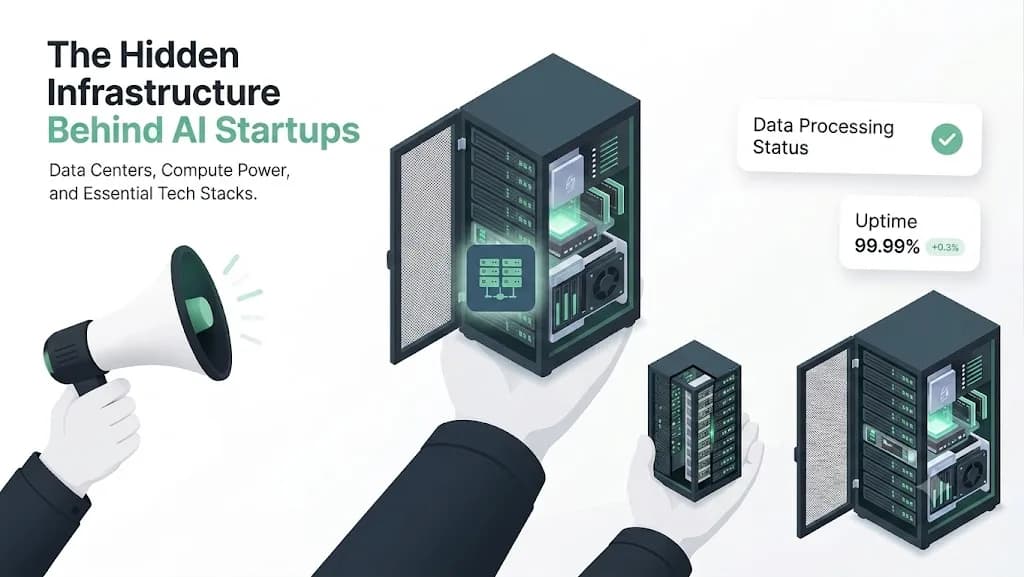
Whether it's ChatGPT answering millions of prompts, an AI healthcare platform processing medical images, or a startup building autonomous vehicles, the intelligence behind these products runs on thousands of GPUs housed inside highly secure data centers. According to Goldman Sachs, global data center power demand is expected to increase by 160% by 2030, largely because of AI workloads. Meanwhile, NVIDIA reported that demand for AI GPUs has reached record levels as businesses race to deploy large language models and generative AI applications. These servers often cost tens of thousands of dollars per GPU, making modern AI infrastructure one of the most valuable physical assets a startup owns.
Yet many founders focus heavily on cybersecurity while overlooking the buildings that keep these systems running. A single unauthorized entry, equipment theft, environmental failure, or operational mistake inside a server room can disrupt AI services, delay product development, and create significant financial losses.
That is why data center security systems have become just as important as cloud security and encryption. They protect the physical infrastructure that makes AI innovation possible.
In this article, you'll learn why physical security is becoming a strategic priority for AI startups, what risks modern data centers face, and how intelligent security systems help protect business continuity.
Key Takeaways
- AI startups rely on physical servers, GPU clusters, and networking infrastructure.
- Physical security failures can lead to downtime, financial losses, and operational disruption.
- Modern data center security systems combine surveillance, access control, AI monitoring, and emergency response.
- Security is becoming a competitive advantage as AI infrastructure becomes more valuable.
- Founders should treat physical infrastructure as a critical business asset rather than an IT afterthought.
1. Every AI Startup Depends on Physical Infrastructure
Many people imagine AI companies operating entirely in the cloud. In reality, every AI model ultimately runs on physical hardware located inside data centers.
Training a large language model requires thousands of GPUs working together for weeks or even months. These systems consume enormous amounts of electricity, generate significant heat, and require carefully managed environments to maintain performance.
If even a small portion of that infrastructure becomes unavailable because of unauthorized access, hardware tampering, or environmental issues, product development can slow dramatically. For startups working under investor expectations and aggressive release schedules, downtime often translates directly into lost revenue and delayed innovation.
This is why founders are paying much closer attention to the physical environments supporting their AI operations.
2. Data Center Security Systems Protect More Than Just Servers
Protecting a data center is about far more than locking a server room.
Modern data center security systems are designed to control who enters sensitive areas, monitor unusual activity, document every access event, and coordinate responses during emergencies. Platforms such as Coram illustrate how this approach has evolved by combining AI-powered video surveillance, access control, emergency management, fire detection, and centralized monitoring into a single platform.
Features such as linked access logs with video footage, AI detection of suspicious behaviour, multi-factor authentication, anti-tailgating measures, and automated emergency responses help security teams respond faster while simplifying compliance and investigations.
Instead of relying on disconnected cameras and badge readers, organizations gain a complete picture of what is happening across critical infrastructure.
For AI startups managing valuable GPU clusters or colocated servers, that visibility can significantly reduce operational risk.
3. Downtime Is One of the Biggest Business Risks
Data centers are built for reliability because every minute of downtime is expensive.
According to Uptime Institute, a significant percentage of organizations report that major outages now cost more than $100,000, while many exceed $1 million depending on the workload and business impact. AI companies are especially vulnerable because model training jobs often run continuously for days or weeks.
A hardware interruption may require workloads to restart, delaying research timelines and increasing cloud or infrastructure costs.
Strong physical security reduces risks from:
- Unauthorized access
- Equipment theft
- Insider threats
- Accidental damage
- Environmental incidents
- Operational errors
Preventing these disruptions protects both customer trust and product development schedules.
4. Insider Threats Are Just as Serious as External Attacks
When founders think about security, they often picture hackers.
However, many security incidents begin with people who already have legitimate access to facilities.
Employees, contractors, vendors, maintenance teams, and temporary technicians frequently enter data centers for routine work. Without role-based permissions and detailed audit trails, organizations may struggle to identify who accessed sensitive equipment and why.
Modern access control systems reduce these risks by limiting access according to job responsibilities, recording every entry attempt, and linking physical access with surveillance footage.
For startups growing rapidly, these controls become increasingly important as headcount and vendor relationships expand.
5. AI Infrastructure Is Becoming More Valuable Every Year
The AI boom has transformed data centers into strategic business assets.
High-performance GPU clusters can represent millions of dollars in infrastructure investment. Beyond the hardware itself, these facilities store proprietary AI models, customer datasets, source code, and intellectual property that define a company's competitive advantage.
This makes physical infrastructure attractive not only to criminals but also to industrial espionage and malicious insiders.
Protecting these environments helps startups preserve:
- Proprietary research
- Customer trust
- Investor confidence
- Regulatory compliance
- Business continuity
As AI adoption accelerates, the value of physical infrastructure will continue to increase.
6. Compliance and Customer Trust Depend on Physical Security
Enterprise customers increasingly ask AI vendors detailed questions about how infrastructure is protected.
Healthcare providers, financial institutions, government agencies, and large enterprises expect suppliers to demonstrate strong operational security before sharing sensitive information.
Physical safeguards complement cybersecurity by showing that organizations protect both digital assets and the facilities where those assets operate.
Access logs, surveillance records, visitor management, and documented security procedures also simplify audits and support compliance requirements across regulated industries.
For startups selling enterprise AI solutions, strong physical security can strengthen customer confidence during procurement.
7. Security Is Becoming Part of AI Startup Strategy
Physical security is no longer just an operational expense.
It has become part of business resilience, investor confidence, and long-term scalability.
As AI infrastructure grows larger and more distributed, founders need visibility across colocated facilities, remote data centers, and expanding engineering operations. Intelligent monitoring, centralized access management, and automated incident response allow smaller security teams to manage larger environments without increasing complexity.
The startups that recognise this early are likely to build stronger, more resilient businesses as AI infrastructure continues to expand worldwide.
Frequently Asked Questions
What are data center security systems?
Data center security systems are integrated technologies that protect physical infrastructure through access control, surveillance, environmental monitoring, emergency response, and visitor management.
Why are data centers important for AI startups?
AI applications rely on powerful servers and GPU clusters to train and deploy machine learning models. Without secure data centers, these workloads cannot operate reliably.
What is the biggest physical risk for AI infrastructure?
Unauthorized access, insider threats, equipment theft, environmental failures, and downtime are among the most significant physical risks facing modern AI infrastructure.
How do modern security systems improve operations?
Modern systems combine AI surveillance, access control, automated alerts, audit trails, and centralized management, allowing organizations to identify incidents quickly and respond more efficiently.
Conclusion
AI may be built with algorithms, but its success depends on physical infrastructure that is secure, reliable, and always available. As startups invest millions in GPU clusters and mission-critical computing resources, protecting the facilities that house them becomes just as important as protecting the software running inside them.
Founders who invest in robust data center security systems are not simply securing servers. They are protecting innovation, customer trust, business continuity, and the long-term future of their companies.
As AI continues to reshape industries, one question becomes increasingly important: Is your startup investing as much in protecting its physical infrastructure as it is in building its AI?