Domain Rating (DR) is Ahrefs' 0-100 logarithmic score that measures the strength of a site's backlink profile. Higher DR correlates with better organic rankings, more search traffic, and lower paid acquisition costs. This guide walks through the exact steps to lift DR in 2026, from auditing your existing links to landing high-authority directory placements. AI Directories shortcuts the first layer of that work by submitting your site to vetted free and paid directories so quality referring domains start landing within days. Expect intermediate skill level and a 90-day runway for visible gains.
What You'll Need Before You Start

Building DR is a measurement game first and a tactics game second. If you can't see what's moving, you can't tell which actions are working. Set up tracking and a content baseline before you send a single outreach email or submit to a single directory.
Tools and accounts
Pull together the basics so the rest of the process is a checklist, not a scavenger hunt. You don't need a full enterprise stack, but you do need visibility into your backlink profile and a way to score progress weekly.
- Ahrefs free Website Authority Checker, or a paid Site Explorer seat for deeper data.
- A working knowledge of your current referring domain count and the DR spread of those domains.
- A crawlable, technically clean site. Broken links, stray noindex tags, and redirect chains all suppress DR signal.
- At least one content asset worth linking to: original research, a free tool, or a genuinely useful data piece.
- A spreadsheet or CRM to log outreach prospects, directory submissions, and link acquisition dates.
A founder-grade AI SEO toolkit covers the first two points without burning a senior hire on tool sprawl.
Baseline metrics to record
Record today's DR, today's referring domain count, and the DR distribution of those domains in three buckets: under 30, 30-60, and 60+. Repeat the snapshot weekly. This is the single most useful input for a backlink tracking workflow because it shows whether new links are actually moving the needle or just padding the count.
Takeaway: Set up your scorecard before you start. You can't improve a number you aren't watching.
Before You Start: What Can Go Wrong
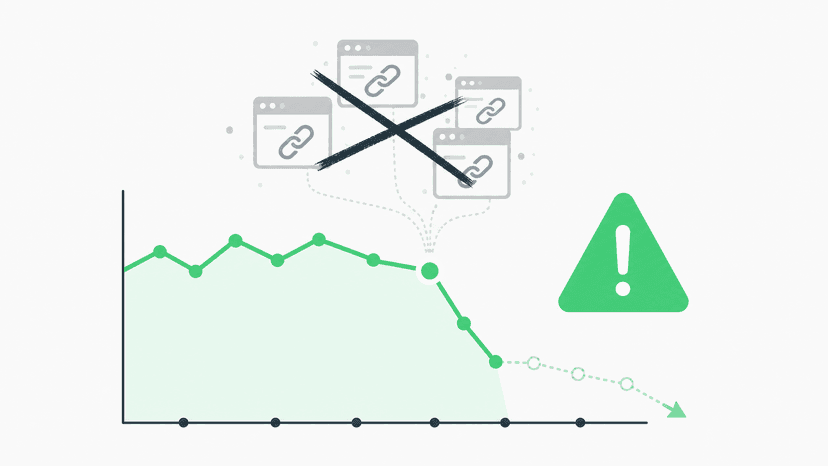
DR is unforgiving of shortcuts. A bad link building strategy can stall the score for months or pull it backwards when Ahrefs recrawls and devalues junk domains. A few rules that save real money:
- Buying links from low-quality link farms or PBNs risks manual penalties and triggers DR drops when those domains get devalued.
- Nofollow, UGC, and sponsored attributes are excluded from Ahrefs' DR calculation. Those links will not move the score, even from a DR 90 page.
- A single referring domain only counts once. Five links from the same root domain add no incremental DR.
- DR is logarithmic. Moving from DR 60 to 70 takes roughly an order of magnitude more high-DR referring domains than DR 10 to 20.
Takeaway: Most DR stalls trace back to one of these four common link building mistakes. Audit before you accelerate.
Step-by-Step: How to Increase Domain Rating Fast

Five steps, in order. Skipping early steps to chase the showier later ones is the most common reason founders spend six months building links and gain three DR points.
Step 1 — Audit and clean your existing backlink profile
Open Ahrefs Site Explorer, export your full referring domains list, and flag anything under DR 5 with irrelevant anchor text or a Moz spam score above 60. Disavow that subset via Google Search Console. A clean profile amplifies the impact of every new referring domain you add, which is why the audit step happens first.
Step 2 — Submit to high-DR free and paid directories
Submit to a curated set of free, high-DR directories first: Product Hunt (DR 90+), Crunchbase (DR 90+), Futurepedia (DR 70+), There's An AI For That (DR 70+), and Toolify. Each one contributes a followed referring domain within 24-72 hours of approval. The free directory submission service from AI Directories covers this set automatically. Then layer in paid placements on Clutch (DR 87), G2 (DR 91), and SourceForge (DR 88). The Custom Quote plan manages paid directory outreach end to end so the listings actually go live with followed attributes.
Step 3 — Create linkable content assets
Original research moves DR faster than any other content format. Ruler Analytics documented how proprietary research pieces and journalist pitches generated 50+ referring domains from a single study. A data report, a benchmarks page, or a free calculator gives publishers an editorial reason to link, which is the only kind of link that compounds. Pair the asset with an AI tools directory listing for distribution day one.
Step 4 — Run targeted link outreach
NetHunt CRM grew DR by 20 points in six months without paid links, mostly through community-led outreach and original content. Pitch only pages with a clear editorial hook, lead with a specific data point, and personalize to the target site's audience. Generic templates get zero replies. A focused scalable outreach process beats volume every time.
Step 5 — Build internal links to your most linked-to pages
Internal links don't add referring domains, but they redistribute the link equity you already have. Point internal links from your highest-traffic pages to your thin or newly published pages to support the external DR signal. This is the lowest-cost lift in the whole playbook and the easiest link equity move to ship in an afternoon.
Takeaway: Audit, submit, create, outreach, link internally. In that order.
Troubleshooting Common DR Growth Problems

Most DR stalls have four root causes. Match the symptom to the fix below before changing strategy.
Symptom: DR has not moved after 60 days of new submissions. Cause: Most new links are from domains under DR 30 or carry nofollow attributes. Fix: Prioritize submissions and outreach only to domains with DR 50+ and verified followed links. Re-run the referring domain audit monthly.
Symptom: DR dropped after a link-building campaign. Cause: Ahrefs recrawled and devalued a bulk of recently acquired links as spammy. Fix: Disavow the devalued domains and shift to editorial or directory-based acquisition. A clean link profile review every quarter prevents repeats.
Symptom: Competitor DR is rising faster despite similar content output. Cause: They have broader directory and press coverage generating more unique referring domains. Fix: Run their domain through Ahrefs Site Explorer, identify directory and media gaps, then build a targeted competitor gap outreach list.
Symptom: Outreach emails generate zero responses. Cause: Pitching generic content to irrelevant sites. Fix: Lead with a specific data point, personalize to the target's audience, and pitch only pages with a clear editorial reason to link.
How Directories Accelerate DR Growth
Directories are the fastest path to followed referring domains because the submission process is structured, the turnaround is predictable, and the acceptance rate for a real product is high. Compared with cold outreach, the math favors directories on every variable except per-link DR ceiling.
Free high-DR directories to target
Free directories handle the foundational layer of your profile. Product Hunt (DR 90), Futurepedia (DR 70+), There's An AI For That (DR 70+), and Toolify each provide a followed link upon approval, usually within 24-72 hours. AI Directories' free tier batches submissions to a vetted set, which removes the per-directory busywork. Used well, this is the highest-leverage top AI directory submission services a new site has access to.
Paid directories worth the investment
Paid directories charge a listing or lead-generation fee but deliver some of the most authoritative followed backlinks online. Clutch (DR 87), G2 (DR 91), and SourceForge (DR 88) are the heavyweights. The Custom Quote plan handles application, verification, and follow-up so listings actually go live with correct anchor text and followed attributes, not stalled in a moderation queue. Diversifying between free and paid sources is also a natural-looking referring profile signal in Ahrefs' algorithm.
Takeaway: Free directories first for breadth, paid directories for ceiling. Run both lanes in parallel.
Frequently Asked Questions
How long does it take to increase Domain Rating?
For sites under DR 30, expect 60-120 days to see meaningful movement with consistent directory submissions and outreach. Higher-DR sites take longer because the logarithmic DR scale requires exponentially more high-quality referring domains per point.
What is a good Domain Rating score?
A DR of 40-50 is solid for most B2B SaaS and content sites. Anything above 60 is competitive for high-difficulty keywords. The right DR benchmark depends on your niche, so compare against the top 10 ranking sites for your money keywords.
Does Domain Rating affect Google rankings?
DR itself is not a Google ranking factor, but the underlying backlink profile that DR measures absolutely is. Sites with strong DR usually rank better because both Ahrefs and Google weight similar quality and quantity backlink signals.
How many backlinks do I need to increase DR?
It depends entirely on the DR of the referring domains. Ten links from DR 70+ sites will move the needle more than 500 links from DR 10 sites. Focus on quality and a varied referring domain mix rather than raw count.
Can I increase DR without paying for links?
Yes. NetHunt added 20 DR points in six months with zero paid links, using original content and community-led outreach. Free high-DR directories and editorial outreach to relevant publications form the core of a zero-budget DR plan.
Do directory submissions actually improve Domain Rating?
Yes, when the directory has DR 50+ and provides followed links. Product Hunt, Crunchbase, G2, and Clutch all qualify. The lift per directory placement is small individually but stacks into meaningful DR gains across 30-50 quality submissions.
What is the difference between Domain Rating and Domain Authority?
Domain Rating is Ahrefs' metric, Domain Authority is Moz's. They measure the same idea, backlink profile strength on a 0-100 scale, with slightly different calculations. Most teams track one or the other for consistency with their core SEO toolset.
Why did my Domain Rating drop suddenly?
The most common cause is Ahrefs recrawling and devaluing a chunk of previously counted links, often after a database refresh. Lost links from expired domains and disavowed link farms also trigger drops. Run a referring domain diff against last month's export to find the cause.
Conclusion
DR growth is a compounding game won by founders who audit first, submit to high-DR directories early, and create assets worth linking to. Skip steps and you'll spend six months building links that don't move the score. Follow the order and a 10-20 point DR lift in 90-180 days is realistic for most sites under DR 50. AI Directories handles the directory layer of that workflow, from the free submissions that build breadth to the Custom Quote plan that manages paid placements on Clutch, G2, and SourceForge. Pair the directory engine with original research and a tight outreach motion and the score takes care of itself.