Choosing an AI image generator used to be simple. DALL-E or Stable Diffusion, pick one. In 2026, the market has fractured into dozens of specialized tools, each claiming to be the best. This guide cuts through the noise and compares what actually matters: output quality, speed, pricing, and real-world usability.
How AI Image Generation Has Changed
The biggest shift over the past year has been the move from single-model tools to multi-model platforms. Rather than committing to one model's aesthetic, creators now chain multiple models together in visual workflow pipelines to get precisely the output they need. A portrait might start in one model for composition, then pass through another for detail refinement.
Model quality has also converged. The gap between the top five generators is smaller than ever, which means secondary factors like speed, API reliability, and integration options now drive most purchasing decisions.
The Major Players
Flux 1.1 Pro
Black Forest Labs' Flux 1.1 Pro has emerged as a strong contender for photorealistic generation. Built by former Stable Diffusion researchers, it delivers consistent skin tones, accurate hands, and reliable text rendering. The model excels at editorial and product photography styles, making it popular among e-commerce teams and marketing agencies.
Pricing runs on a per-image basis through various API providers, typically $0.03-0.05 per generation at standard resolution.
Midjourney v7

Midjourney remains the go-to for artistic and stylized outputs. Version 7 improved prompt adherence significantly, though it still struggles with precise text rendering. The Discord-only workflow is polarizing: power users love the community aspect, while production teams find it inefficient for batch work.
DALL-E 4
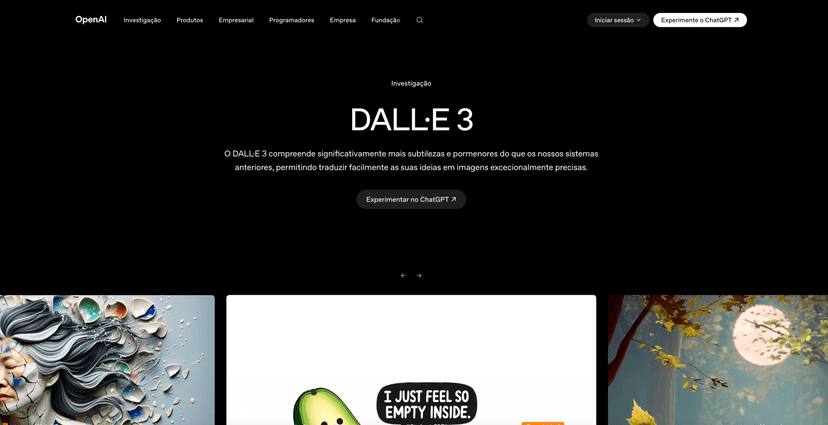
OpenAI's latest brings the best prompt understanding of any generator. Complex multi-element scenes that trip up other models render correctly on the first try. The tight ChatGPT integration makes it accessible, but API costs are higher than competitors at $0.04-0.08 per image.
Stable Diffusion 4
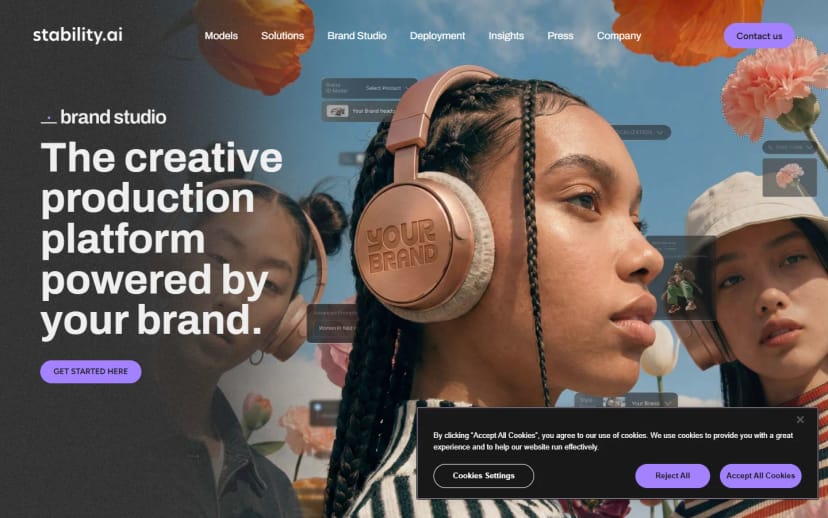
The open-source option remains unbeatable for customization. Fine-tuning on custom datasets, running locally with no per-image costs, and full control over the generation pipeline make it the choice for teams with technical resources. The tradeoff is setup complexity and hardware requirements.
Recraft V4
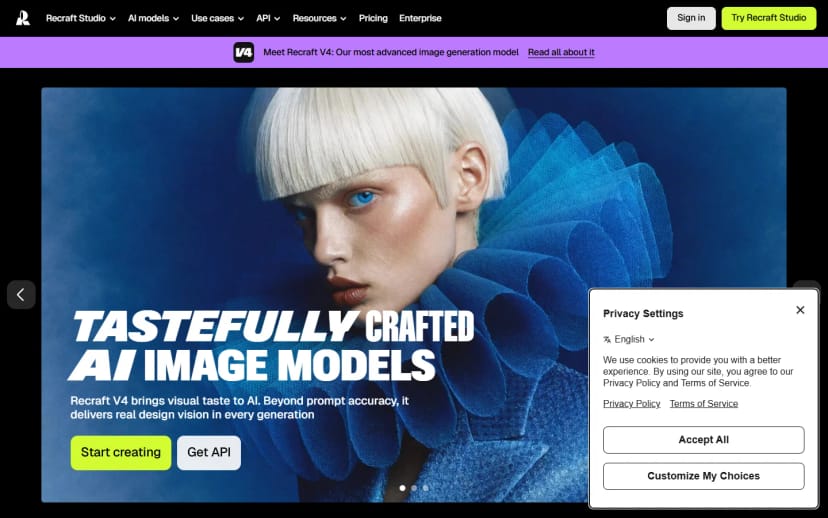
Recraft has carved out a niche in design-oriented generation. Vector outputs, brand-consistent color palettes, and built-in typography controls set it apart from photorealism-focused competitors. It's the only generator that produces truly production-ready design assets without post-processing.
Head-to-Head Comparison
- Best photorealism: Flux 1.1 Pro, DALL-E 4
- Best artistic style: Midjourney v7
- Best for designers: Recraft V4
- Best for developers: Stable Diffusion 4 (self-hosted), Flux (API)
- Best prompt understanding: DALL-E 4
- Best value: Stable Diffusion 4 (free, self-hosted)
Choosing Based on Your Use Case
Marketing and Advertising
Marketing teams need consistent brand imagery at scale. Look for tools with style presets, batch generation, and API access. Flux and DALL-E both handle this well, though Flux edges ahead on consistency across large batches.
Editorial and Publishing
Publishers need variety and speed. Midjourney's artistic range works for feature illustrations, while Flux or DALL-E handle more literal interpretations for news and product coverage.
Product Photography
E-commerce teams should evaluate Flux 1.1 Pro and DALL-E 4 specifically. Both handle product-on-background compositions reliably, with Flux offering better skin tones for lifestyle shots.
Game and Concept Art
Midjourney and Stable Diffusion dominate creative concepting. The ability to iterate rapidly on stylized concepts, then refine selected directions, fits game development pipelines naturally.
Pricing Breakdown
Most generators use per-image pricing between $0.02 and $0.08 depending on resolution and model tier. Monthly subscription plans average $20-60 for individual creators and $100-300 for team plans. Self-hosted Stable Diffusion eliminates per-image costs but requires GPU hardware ($500+ upfront or $0.50-2.00/hour cloud).
FAQ
Which AI image generator produces the most realistic images? Flux 1.1 Pro and DALL-E 4 are currently tied for photorealism. Flux handles portraits and product shots slightly better, while DALL-E 4 excels at complex multi-element scenes.
Can AI-generated images be used commercially? Yes, most major generators grant commercial usage rights on paid plans. Check each tool's terms, as specifics vary. Midjourney, DALL-E, and Flux all allow commercial use.
Is Stable Diffusion still worth using in 2026? Absolutely. For teams with technical expertise, self-hosted Stable Diffusion offers unmatched customization and zero per-image costs. It's the best option for fine-tuning on proprietary datasets.
How much does AI image generation cost per month? Individual creators typically spend $20-60/month. Teams generating at scale spend $100-500/month depending on volume. Self-hosted options reduce marginal costs to near zero after initial hardware investment.
Which tool is best for beginners? DALL-E 4 through ChatGPT offers the lowest barrier to entry. Natural language prompts work well without learning specialized syntax, and the interface is intuitive.
Can these tools generate consistent characters across images? Midjourney and Flux both support character consistency features. Stable Diffusion achieves this through fine-tuning. DALL-E 4's reference image feature also helps maintain consistency.
Conclusion
There is no single best AI image generator in 2026. The right choice depends entirely on your specific needs. For photorealism, Flux 1.1 Pro leads. For artistic work, Midjourney remains unmatched. For full control, Stable Diffusion is the answer. For ease of use, DALL-E 4 wins. And for production design assets, Recraft V4 stands alone. Many professional teams now use two or three of these tools together, leveraging each model's strengths across different parts of their creative pipeline.