Introduction
Imagine sending a client a polished SEO report that looks like it came straight from your agency’s in house analytics team even if it was generated by a third party tool. That’s the power of white label SEO reports.
Since the early 2010s, agencies have leaned on white label solutions to scale reporting without sacrificing branding. With SEO becoming increasingly data driven, these reports have evolved from simple keyword rankings to comprehensive dashboards covering backlinks, traffic, and ROI. For consultants and freelancers, they’re a way to look bigger than you are without the overhead.
The real value lies in perception. Clients don’t just want numbers; they want confidence that their agency is in control. A branded report reinforces trust, shows professionalism, and makes insights easier to digest. Whether you’re a solo consultant or a mid size agency, white label reporting can help you deliver consistent value while keeping your brand front and center.
What Are White Label SEO Reports?
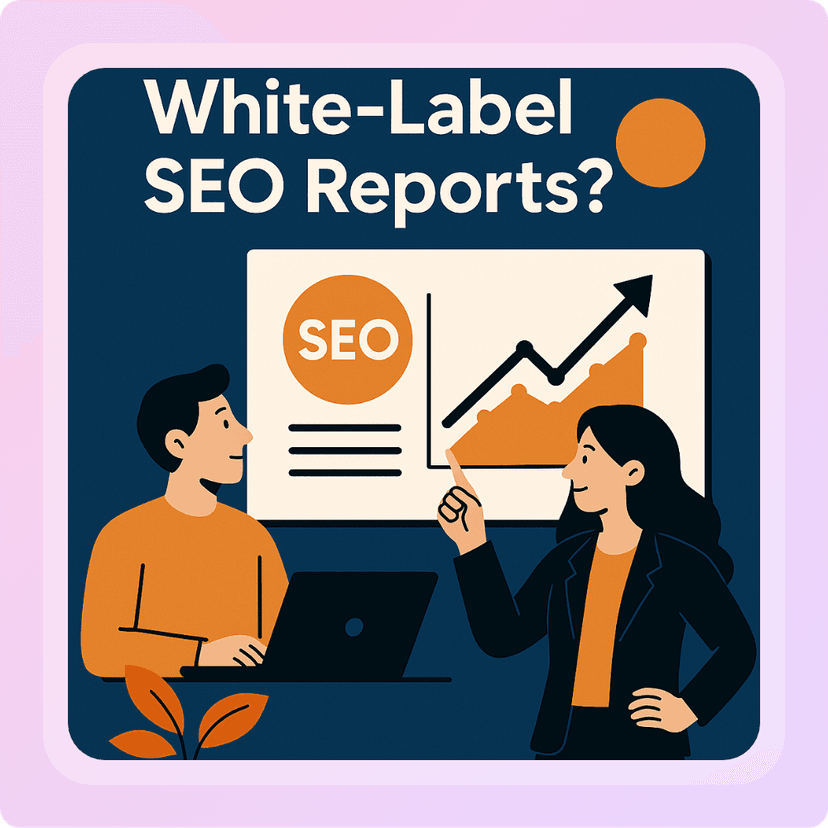
White label SEO reports are analytics documents created by third party tools but customized to look like they came directly from your agency. In simple terms, they’re “outsourced reports with your branding.”
Agencies use them because building reporting systems from scratch is expensive and time consuming. Instead, they rely on trusted platforms that gather data on keyword rankings, backlinks, traffic, and conversions, then present it in a polished format. The magic lies in personalization adding your logo, brand colors, and commentary makes the report feel unique.
while maintaining brand identity.
- Why agencies use them: Saves time, reduces manual work, and ensures consistency.
- Key components: Keyword rankings, traffic trends, backlink analysis, and conversion metrics.
- Real world personalization: Adding logos, custom colors, and tailored commentary makes reports feel unique.
Key Benefits for Agencies and Consultants
The biggest advantage of white label SEO reports is efficiency. Instead of spending hours pulling data from multiple platforms, agencies can automate the process and deliver polished insights in minutes.
This time savings translates into more bandwidth for strategy, client communication, and growth. Another benefit is trust clients feel reassured when they receive branded reports that look consistent and professional. For consultants or freelancers, this can elevate their perceived size and capability, making them appear more established.
- Save time with automated reporting: No more manual data pulls.
- Strengthen client trust: Branded deliverables show professionalism.
- Scale services without extra staff: Handle more clients with less overhead.
- Improve perceived professionalism: Clients see polished, agency branded insights.
Essential Features to Look for White label reporting
Not all white label reporting tools are equal, so knowing what features matter is key. First, look for custom branding options, logos, colors, and templates that align with your agency’s identity. This ensures every report feels like it’s truly yours.
Next, consider localization support. If you serve global clients, multi language options and region specific search data are essential. Integration is another big one.
The best tools connect seamlessly with platforms like SEMrush, Ahrefs, Google Analytics, and social media trackers, so you don’t waste time juggling data sources. Finally, automation is a must. Scheduled delivery means reports go out on time without manual effort, keeping clients informed and happy.
- Custom branding and logos: Keep your identity intact.
- Multi language/localization support: Serve global clients seamlessly.
- Integration with SEO tools: Connect with SEMrush, Ahrefs, and Google Analytics.
- Automated scheduling: Reports delivered on time, every time.
Top White Label SEO Reporting Tools
Several platforms stand out in the white label reporting space. SEMrush My Reports is known for its deep keyword and competitor insights, making it a favorite for agencies focused on search visibility.
AgencyAnalytics offers all in one dashboards with strong branding options, perfect for agencies that want flexibility. DashThis is simple and visual, ideal for teams that value clarity and ease of use.
Raven Tools provides flexible reporting with historical data and customizable layouts, making it a solid choice for agencies that need depth.
AgencyAnalytics - All in one dashboards with strong branding options
AgencyAnalytics delivers a unified platform where agencies can monitor SEO, PPC, social media, and email campaigns in real time. Its dashboards are fully customizable, allowing agencies to embed their branding seamlessly. This tool simplifies client communication by consolidating multiple data sources into one intuitive interface, making performance reporting both efficient and visually impressive.
Strengths
- All in one dashboards: Centralized view of marketing channels.
- White label branding: Professional client facing customization.
- Automated reporting: Saves time with scheduled delivery.
- Wide integrations: Connects with major marketing platforms.
Summary: AgencyAnalytics is ideal for agencies that want polished, branded dashboards and streamlined reporting across diverse marketing channels.
DashThis - Simple, visual reporting for agencies
DashThis specializes in creating visually engaging reports that simplify complex marketing data. Designed for agencies, it transforms analytics into easy to read dashboards that clients instantly understand. Its drag and drop interface and pre built templates make reporting quick, while its focus on clarity ensures that insights are communicated effectively without overwhelming clients with unnecessary detail.
Strengths
- User friendly interface: Minimal learning curve for teams.
- Visual dashboards: Clear, engaging presentation of data.
- Pre built templates: Fast setup for common reporting needs.
- Client friendly design: Simplifies data for non technical audiences.
Summary: DashThis is perfect for agencies prioritizing simplicity, speed, and visually appealing reports that resonate with clients.
Raven Tools - Flexible reporting with historical data insights
Raven Tools provides agencies with robust reporting capabilities that combine SEO audits, link tracking, and historical data analysis. Its strength lies in flexibility, enabling professionals to tailor reports across multiple campaigns while leveraging long term insights. By integrating diverse metrics, Raven Tools helps agencies demonstrate progress over time and highlight the strategic impact of their efforts.
Strengths
- Historical data tracking: Long term visibility into performance trends.
- SEO audit tools: Comprehensive site health analysis.
- Flexible reporting: Customizable across campaigns and clients.
- Link management: Monitors backlinks and authority growth.
Summary: Raven Tools stands out for agencies that value flexibility and historical insights, making it a reliable choice for demonstrating long term success.
How to Choose the Best Tool for Your Agency
Selecting the right tool is about matching features to your workflow and client expectations. Start by assessing client needs. Do they want detailed SEO breakdowns or simple traffic summaries? Next, compare pricing tiers. Balance affordability with functionality, and don’t forget to factor in ROI.
Ease of use is another critical consideration. Your team should be able to adopt the tool quickly without a steep learning curve. Finally, think about scalability. Choose a platform that grows with your agency’s client base, not one you’ll outgrow in a year. The best tool isn’t necessarily the most expensive, it's the one that fits your agency’s goals, saves time, and delivers reports that clients actually value.
- Assess client needs: Do they want deep SEO insights or simple traffic reports?
- Compare pricing tiers: Balance cost with features.
- Evaluate ease of use: Your team should adopt it quickly.
- Consider scalability: Choose a tool that grows with your agency.
ROI and Pricing Considerations
White label reporting tools are an investment, not just an expense. Pricing models vary some charge per client, others per report, and many use subscription tiers. To calculate ROI, compare the hours saved against the subscription cost.
If a tool saves you ten hours a month, that’s time you can spend on strategy or new business. Watch out for hidden costs, though. Some platforms charge extra for integrations or add ons. Value versus affordability is the real trade off.
Don’t sacrifice quality for a cheaper option, but don’t overpay for features you’ll never use. The right tool should pay for itself by freeing up your time and helping you deliver better results to clients.
- Pricing models: Per client, per report, or subscription.
- Calculating ROI: Compare saved hours vs. subscription cost.
- Hidden costs: Extra integrations or add ons.
- Value vs. affordability: Don’t sacrifice quality for price.
Maximizing Value for Agencies
Smart agencies use white label reports as more than just data dumps. Automation streamlines workflows, freeing up time for strategy. Reports can also be used as upsell opportunities highlighting growth trends or gaps that justify new services. Personalization is key. Adding tailored commentary makes insights more meaningful for each client.
- Streamline workflows: Automate repetitive tasks.
- Upsell opportunities: Use reports to pitch new services.
- Personalize insights: Tailor commentary for each client.
- Showcase growth trends: Highlight long term wins.
Common Pitfalls and Warnings
Even polished reports can backfire if misused. One common pitfall is over reliance on automation. Data without context can confuse clients or even erode trust. Another mistake is overwhelming clients with jargon. Reports should be clear and accessible, not technical manuals. Lack of customization is another issue. Generic reports feel impersonal and can make clients question your attention to detail. Finally, ignoring client specific KPIs is a big red flag. If a client cares about conversions but you only show rankings, you’re missing the mark. Avoid these pitfalls by adding context, simplifying language, customizing branding, and focusing on metrics that matter most to each client.
Data and Insights Clients Actually Care About
Clients don’t care about vanity metrics, they care about results. Keyword rankings are important, but only when tied to visibility trends. Organic traffic growth is clear proof of progress and often the most tangible metric for clients. Backlink quality matters too, especially domain authority and relevance, which signal long term SEO health.
- Keyword rankings: Visibility trends over time.
- Organic traffic growth: Clear proof of progress.
- Backlink quality: Domain authority and relevance.
- Conversion metrics: Tie SEO to business outcomes.
Personalization and Branding Strategies

Reports should feel like they belong to your agency, not a generic tool. Adding your agency’s colors and logos reinforces brand identity. Tailoring language to each client’s industry makes the report more relatable. Storytelling is another powerful strategy. Highlighting wins with narratives like “your organic traffic doubled in six months” makes data feel human. Branded templates ensure consistency across all deliverables, which builds trust over time. Personalization isn’t just about aesthetics; it’s about making clients feel seen and valued. When reports reflect both your brand and your client’s priorities, they become more than documents; they become relationship building tools.
Localization Support for Global Clients
Global clients expect reports that speak their language literally. Multi language options are essential if you serve diverse audiences. Region specific search engine data ensures accuracy, since Google isn’t dominant everywhere. Cultural considerations also matter. A report tailored for a Japanese client might emphasize different metrics than one for a U.S. client. Localized dashboards bring it all together, showing insights that feel relevant to each market. This level of customization signals respect and professionalism.
- Multi language options: Serve diverse audiences.
- Region specific data: Adapt to local search engines.
- Cultural considerations: Adjust tone and visuals.
- Localized dashboards: Examples tailored to client regions.
Real World Case Studies
Case studies bring theory to life. A freelancer using white label reports can scale quickly, appearing larger and more professional than they are. A mid size agency might use branded reports to improve client retention, showing consistent value month after month. Enterprise agencies often leverage reports for upselling, using insights to pitch premium services. On the flip side, failed implementations highlight the risks of poor customization. Generic reports can make clients feel neglected, leading to churn. These stories prove that white label reporting isn’t just about tools it’s about execution. Done well, it strengthens relationships. Done poorly, it can damage them.
Tools, Tips, and Strategies for Effective Reporting
Effective reporting blends technology with human insight. Combining multiple data sources SEO, analytics, and CRM creates a fuller picture. Setting clear KPIs before reporting ensures you measure what matters. Visual dashboards make complex data easy to digest, turning numbers into stories. Regularly updating templates keeps reports fresh and relevant. The best strategy is to treat reports as communication tools, not just data dumps.
- Combine multiple sources: SEO + analytics + CRM.
- Set clear KPIs: Define success before reporting.
- Visual dashboards: Charts and graphs for clarity.
- Update templates: Keep reports fresh and relevant.
Future of White Label SEO Reporting
The future of white label SEO reporting is exciting. AI driven insights will make reports smarter, offering predictive analytics that guide strategy. Real time dashboards are replacing static PDFs, giving clients instant access to evolving data. Deeper integration with CRM systems will connect SEO insights directly to sales and customer relationships. Transparency is also becoming more important. Clients expect clear, honest reporting that shows both wins and challenges. Agencies that embrace these trends.
Elevate Your Startup’s Visibility
In today’s competitive landscape, visibility is everything. AI Directories makes it simple for founders and product creators to get discovered by centralizing submissions to more than 100 directories.
- Save time: One submission, multiple platforms.
- Expand reach: Tap into diverse audiences across industries and regions.
- Build trust: Directory listings add legitimacy and strengthen your brand image.
- Founder focused: Built with simplicity in mind, so you can focus on growth instead of admin work.
Whether you’re launching a new service or scaling an existing one, this tool ensures your product doesn’t just exist, it gets noticed.
Conclusion
White label SEO reports aren’t just about saving time, they're about reinforcing your brand, scaling your services, and delivering insights that matter. From their history as simple ranking sheets to today’s customizable dashboards, they’ve become essential for agencies, consultants, and freelancers alike.
If you want to stay competitive, invest in tools that balance automation with personalization. The next step? Audit your current reporting process and explore whether a white label solution could free up your time while strengthening client relationships.