Introduction
Picture this: You’re watching an epic fight scene, a major character revelation, or a beautiful moment of animation. You glance down to read the subtitles, and just like that, you’ve missed the best part. Honestly, the friction of having to choose between reading and watching is the main reason why so many people struggle to get into anime.
As someone who’s watched both sides of the "sub vs. dub" debate play out, I get where the purists are coming from. But honestly, modern anime dubs aren’t just a convenient option they’re a labor of love and artistry that helped put Japanese animation on the global map. Personally, as a non Japanese speaker, a well-crafted dub is often the best way for me to experience the story in full. Let me walk you through what really goes into transforming a hit anime into a soulful, relatable experience in a brand-new language.
The Evolution of Anime Dubbing: From Niche to Netflix
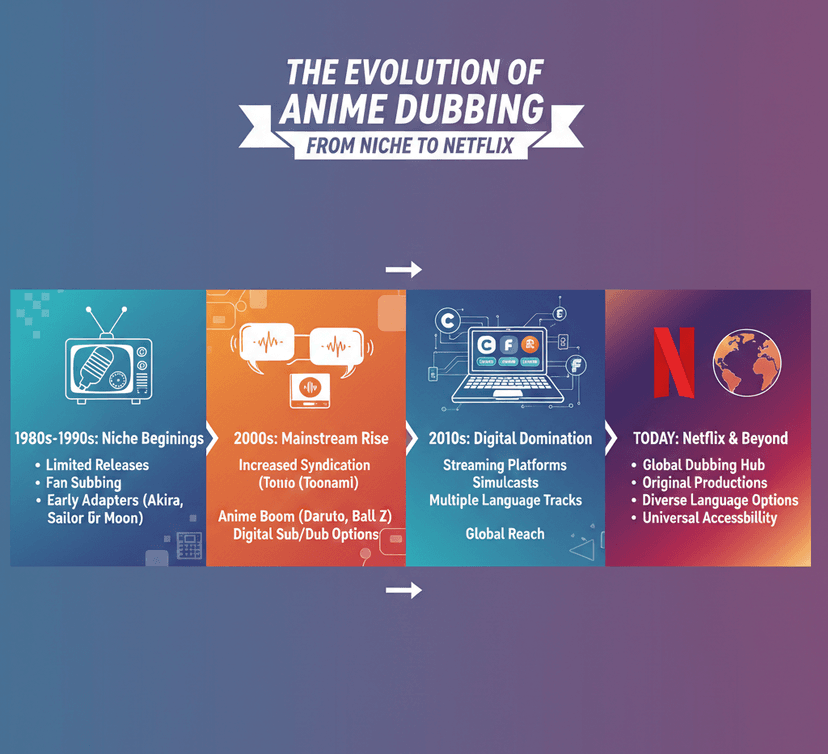
If you’ve been watching anime for a while, you know the dubbing journey has been long and, frankly, kind of messy. If you were watching in the '90s, you might remember the wild inconsistencies and low budget feel of those early attempts. They were often frustrating.
A lot of those early companies treated anime like just another kids' cartoon, not the deep drama or action packed epics they often were. We saw heavily localised and often censored versions, I’m looking at you, 4Kids, where whole chunks of dialogue were rewritten, names were changed, and anything remotely mature was scrubbed out. The goal was simply to make the shows digestible for a Western audience, even if it meant sacrificing the original creator's vision.
Game Changing Dubs: But then came shows like Dragon Ball Z and Cowboy Bebop. Their English voice casts were powerful, iconic, and captured the essence of the characters in a way that proved dubs could launch a franchise into the mainstream. They weren't always perfect, but they laid the foundation.
The Modern Quality Shift: Today, streaming services like Netflix, Crunchyroll, and Funimation have completely changed the game. They’ve invested heavily in quality, focusing on translation fidelity. This means staying true to the original Japanese script, preserving cultural context, and respecting the director’s artistic intent.
The Cinematic Expectation: You can see this quality jump in high production titles like Attack on Titan or Cyberpunk: Edgerunners. We expect a cinematic, polished experience now. It's a huge shift from rushed, edited versions to productions that show real respect for the global audience.
Behind the Voice: The Technical Art of Localising a Dub
Trust me, producing a quality anime dub is a high-wire technical act. It’s way more complicated than just having someone read a translated script. The whole process is called localisation, and it's a massive, multi-step balancing act.
It all starts with a literal translation, but the script then moves into the intense adaptation phase. This is where the scriptwriter has to rewrite the dialogue. They don't just need to keep the original meaning; they have to make the new English words precisely match the movement of the Japanese characters’ mouths, which is known as flapping or lip-syncing. This lip-syncing challenge is arguably the single hardest part of the job.
-
The Flapping Challenge is Real: An English phrase is rarely the same length as the original Japanese. This forces the adapter to find shorter synonyms or completely rephrase a sentence, all while preserving the original meaning and emotional weight. It's a linguistic puzzle.
-
The ADR Director's Role: The ADR (Automated Dialogue Replacement) Director is the one running the show. They guide the voice actors, making sure they deliver the line with the right emotion and hit those strict timing cues needed for the lip-sync. That level of focus required from the voice talent is truly incredible.
-
The Cultural Pitfalls: Translators also have to constantly wrestle with culture. How do you translate the complex meaning of Japanese honorifics (like -san or -senpai) or culturally specific puns without either over-explaining it or completely losing the new audience? A skilled localizer usually finds an equivalent emotional or cultural shortcut that works just as well for Western ears.
Sub vs. Dub: Why the Debate Misses the Point
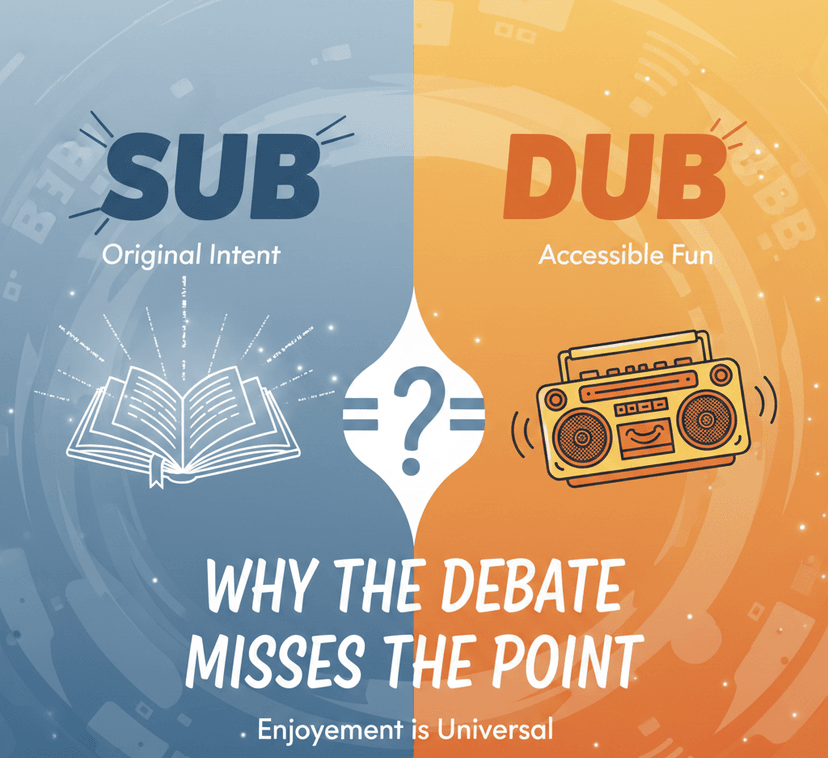
The famous "sub vs. dub" debate is always a passionate one, but I think it gets hung up on the wrong idea: that one is inherently "better." The truth is, they are just different viewing experiences and both are valid.
Sure, subtitle fans champion authenticity. They argue that hearing the original Japanese voice actors preserves the exact performance the director intended. That’s a totally fair point, especially when a Japanese voice actor’s talent is a key part of the show's identity.
But honestly, the benefits of a dub are undeniable, and they offer things a sub just can't deliver.
-
Focus on the Action: A dub allows you to focus 100% on the stunning animation, the action, and the character expressions without having your eyes constantly darting to the bottom of the screen. Plus, for people with reading difficulties, a quality dub is their only clear option.
-
The Freedom to Multitask: If you're doing chores, cooking, or even just scrolling on your phone, a dub means you can still follow the narrative and emotional beats of the show without being glued to the subtitles.
-
The Enhanced Experience: For a lot of people, especially those new to anime, a truly great dub is the best gateway into the medium. For example, the English cast of Fullmetal Alchemist: Brotherhood is often mentioned because it was so well-cast and directed that it enhances the experience for its audience.
The main takeaway here? We need to stop seeing this as a competition. The best approach is to enjoy both and give credit where it's due: a great dub is a powerful piece of art that seamlessly bridges a cultural and linguistic gap.
The Global Impact: How Dubs Fuel Anime's International Boom
Look, quality dubs aren't just a nice little addition; they are the absolute engine driving anime’s massive international growth. If a series is only available in one language, its potential audience is instantly capped, and that's just bad business.
When a show gets a Simul Dub, a simultaneous, multi-language dub release that comes out shortly after the original Japanese episode, it speeds up the mainstream acceptance of anime worldwide. This is a smart business strategy that treats anime like the global, commercial product it has become.
-
Economic Expansion is Key: Dubs are vital for unlocking markets beyond just the US, including vast regions in Latin America and Europe. Every new language track translates to a bigger audience, which means more revenue flowing back to the Japanese studios. It’s a win-win.
-
They Create Real Jobs: The dubbing industry supports a thriving economy. It means steady work for thousands of voice actors, ADR directors, sound mixers, and script translators all over the world.
-
True Mainstream Acceptance: When you can watch Demon Slayer or a beautiful Studio Ghibli film in a perfectly executed, theatrical-quality English dub, it legitimizes anime as a global cinematic art form, right alongside films from Hollywood or any other major studio. This accessibility is precisely why anime has moved from a niche hobby to a dominant force in pop culture.
Conclusion
The endless debate over sub vs. dub often misses the point entirely by overlooking the incredible skill, passion, and sheer effort that goes into producing a quality anime dub. These adaptations are much more than simple translations; they are vital cultural bridges. They allow millions of non-Japanese viewers to connect deeply with complex characters and narratives without any distraction. A great dub is a powerful testament to the localization artists who work under insane pressure to ensure the heart of the original story remains intact.
They expand the market, create jobs, and most importantly, they make the wonderful world of anime truly accessible to everyone, whether you’re a lifelong fan or just curious.
Try this now: Tonight, give a high-quality dub a fair chance. Watch an episode of a series you’ve only ever seen subtitled, like Fullmetal Alchemist: Brotherhood. Really pay attention to the voice acting and the script adaptation, and I bet you’ll discover a brand-new, immersive way to experience your favorite stories.