
Directory submission is the process of adding your website URL and business details to online directories so search engines can verify your brand and users can discover you across the web. Done with care, it still earns backlinks, referral traffic, and trust signals in 2026. This guide from AI Directories walks you through the full submission workflow, from prep to tracking, with a beginner-to-intermediate skill level and roughly two to four hours of focused work to get your first batch live.
What You'll Need Before You Start
Before you touch a submission form, get your assets in one place. Sloppy prep is the single biggest reason listings get rejected or sit in moderation for weeks. Spend thirty minutes here and you will save hours later.
Required information and assets
- A consistent NAP profile (Name, Address, Phone) that matches your website footer and Google Business Profile exactly.
- Two business descriptions: a short 50-word version and a long 150 to 200-word version, each written around your two or three primary keywords.
- One primary category and up to three secondary categories, picked before you open any directory.
- Your logo in PNG and SVG, a square favicon, and one landscape hero image (1200x630 works almost everywhere).
- Canonical homepage URL, all social profile URLs, and a founder bio of 60 to 80 words.
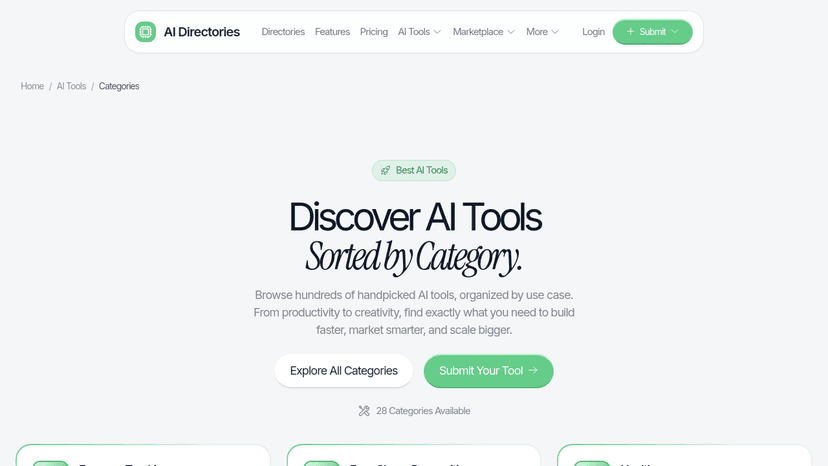
For SaaS and AI products, your category planning matters more than you think; browse a working taxonomy like the AI tools categories index to see how modern directories slice the market.
Tools and accounts to set up
Create a dedicated inbox like listings@yourdomain.com so approval emails do not get lost in your personal inbox. Spin up a tracking spreadsheet (Google Sheets is fine) and a password manager entry for directory logins. If your wider plan involves link building work alongside submissions, set up a simple Search Console export schedule too, so you can attribute referral lift later.
Takeaway: Treat directory prep like product prep. One asset folder, one inbox, one spreadsheet. Everything else slows you down. For a deeper look at how a structured listing portfolio develops over time, see the AI tools partners page.
Before You Start: What to Back Up and What Can Break
Nothing to back up for this one, but plenty can break if you submit at scale without thinking. Read this section before you queue 50 submissions in a weekend sprint.
Risks of bulk or careless submission
Google's spam policies explicitly flag manipulative link building at scale. According to Google's link spam guidance, low-quality directory links can be ignored, devalued, or trigger a manual action against your site. The fix is not to avoid directories; it is to avoid the bottom 80% of them. Audit before you add.
Inconsistent NAP data is the next silent killer. If your address is "Suite 4" on one listing and "#4" on another, you weaken local ranking signals. Run a citation audit on your existing footprint before you add new entries, especially if you have rebranded or moved offices in the last two years. The basics of an ongoing audit cadence are covered well in our blog archive.
Google's stance on directory links
Google does not penalize directory submissions per se. It penalizes patterns that look manipulative: identical anchor text across hundreds of low-DA sites, sudden link velocity spikes, and submissions to known spam farms. The current consensus is quality over quantity. Twenty editorially vetted listings beat two hundred auto-approve ones every time. Browse popular searches on the platform to see which categories attract the most qualified discovery traffic.
Takeaway: The risk is not directories. It is the temptation to submit everywhere. Curate ruthlessly.
Step-by-Step: How to Submit Your Site to Directories
This is the core workflow. Five to ten directories per session is a sane pace. Anything faster and your descriptions start to look copy-pasted, which reviewers spot immediately.
Step 1: Research and shortlist target directories
Open a fresh tab and build a shortlist of 30 to 50 candidate directories. Pull from three sources: industry roundups, competitor backlink profiles (Ahrefs, Semrush, or free tools), and curated hubs like the AI Directories catalog. This installs your raw list. You should now see a column of URLs in your tracker labeled "candidates."
Step 2: Evaluate each directory's quality
Score each candidate on four signals: Domain Authority, organic traffic, editorial review process, and topical fit. Industry guidance from Directorist recommends targeting directories with a DA of 30 or higher; anything below that rarely moves the needle. Check the directory's own search results for spammy listings (gambling, adult, pharma where it does not belong). If half the front page looks junk, skip it. For an editorial baseline, see how AI tools alternatives pages are curated; that level of human review is what you want from any directory you pay or pitch.
Step 3: Complete and submit your listing
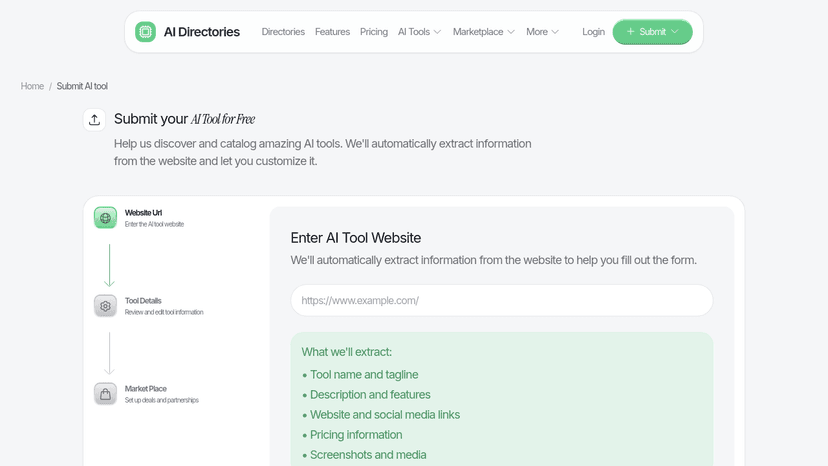
Open the submission form, paste your prepped assets, and fill every field. Match your category to the directory's taxonomy precisely; miscategorized listings get less traffic and weaker topical signals. Use the long description for sites that allow 150-plus words and the short one for tight forms. Add your logo, social links, and at least one screenshot. If you're submitting an AI product specifically, our submit AI tool form is a working example of the shape most modern directories now use.
Step 4: Monitor approval and follow up
Log the submission date and the directory's stated review window in your tracker. Manual directories typically take 7 to 30 days. If you have not heard back after the stated window, send one polite follow-up email from your listings inbox. Mark the listing live once you can find it via the directory's internal search. For longer-term cadence, the pricing page outlines featured and expedited listing options that can help keep this loop running efficiently.
Takeaway: Research, score, submit, log. Same four steps every time. Boring is the point.
Choosing the Right Types of Directories

Not all directories play the same role. A balanced portfolio mixes general coverage, niche relevance, and local presence.
General vs. niche directories
General directories (DMOZ-style hubs, broad business listings) build foundational trust signals and brand mentions. Niche directories drive qualified referral traffic because their visitors are already in your market. Research summarized by Product Launch List on niche directory strategy argues that a tech startup in a tech directory sends a stronger relevance signal than the same startup buried in a generic business hub. Lean niche for conversion, general for coverage. The AI Directories blog has more breakdowns by vertical if you want to go deeper.
Local and regional directories
If you serve a geographic area, claim Google Business Profile first, then Yelp, Bing Places, Apple Business Connect, and the strongest regional directory for your country. These five often outperform fifty random global listings for local rank. Keep NAP identical across all of them. A clean local citation footprint is also a prerequisite for any serious dofollow backlinks campaign tied to a physical location.
AI and technology directories
AI-specific and SaaS directories have exploded since 2024. They send relevant backlinks, qualified discovery traffic, and often a launch-day spike in signups if you time it well. Free listings cover the foundation; paid or featured slots in high-DA niche directories can be worth it when CPCs in your category are high. Browse the AI tools index to see what a healthy listing page looks like before you submit yours elsewhere.
Takeaway: Build a portfolio, not a pile. General for trust, niche for traffic, local for rank.
Troubleshooting Common Submission Problems
Three failure modes cover roughly 90% of what goes wrong. Diagnose by symptom, then apply the fix.
Symptom: Submission rejected. Cause: Description contains promotional language ("the best," "world-leading") or keyword stuffing. Fix: Rewrite in plain factual language. State what the product does and who it serves. Resubmit after 72 hours.
Symptom: Duplicate listings appear in search results. Cause: Multiple submissions to the same directory, or rebranding without updating old entries. Fix: Claim both listings using the directory's owner verification flow, then request a merge. Most major directories have a self-serve merge form. The submit AI tool page shows the verification fields most modern directories now require.
Symptom: No ranking change after 60 days. Cause: The directories you picked have low DA or only nofollow links. Fix: Audit your link profile with Ahrefs or Moz, drop the underperformers from future cycles, and prioritize higher-authority targets. Tie this audit to a monthly SEO review so it actually happens.
Symptom: Confirmation email never arrived. Cause: Sent to spam, or the wrong address was entered. Fix: Check spam, whitelist the directory's domain, and resubmit with your dedicated listings inbox.
Takeaway: Most submission problems are description problems. Plain language beats clever language every time.
Tracking and Maintaining Your Directory Listings

Submissions are not a one-time project. Treat your listings like a small portfolio you rebalance every quarter.
Setting up a submission tracker
Your tracker needs eight columns: directory name, URL, submission date, approval status, listing URL, DA at submission, dofollow or nofollow, and notes. Add a "last verified" column once you have 25+ listings. Check the AI tools deals page for featured listing opportunities worth adding to your tracker as high-priority targets.
Ongoing citation audits
Re-audit when your business changes address, phone number, or domain. Citation tools like BrightLocal or Moz Local surface duplicates and inconsistencies that manual tracking misses. Quarterly, scan your directory backlink profile for sites that have declined in quality or been penalized, and disavow the egregiously bad ones. For a lighter weekly rhythm that catches drift early, the affiliates program overview is a good reference for understanding how ongoing partnership and listing health interrelate.
Takeaway: A directory listing is a living asset. Audit quarterly or watch it rot.
Frequently Asked Questions
Is directory submission still good for SEO in 2025 and 2026?
Yes, when done selectively. High-quality, relevant directories still pass trust signals, referral traffic, and brand mentions. The strategy has shifted from volume to curation: twenty vetted listings now beat two hundred auto-approve ones.
What information do I need to submit my website to a directory?
You need a consistent business name, address, phone, website URL, two description lengths (short and long), primary and secondary categories, a logo, social profile links, and a contact email dedicated to directory correspondence.
What is the difference between free and paid directory submission?
Free submissions cover foundational coverage with no cash cost but slower review windows. Paid or featured listings buy faster approval, higher placement, and sometimes editorial review. Pay only when the directory's DA and traffic justify the spend.
How many directories should I submit my site to?
Aim for 20 to 50 carefully chosen directories in your first year. Beyond that, returns diminish quickly. A focused portfolio of niche, local, and high-DA general directories outperforms a sprawling list of low-quality submissions.
Do directory submission links count as dofollow or nofollow backlinks?
Both exist. Many free directories use nofollow to discourage spam; editorially curated and paid directories more often pass dofollow links. Both still send referral traffic and brand signals, so do not dismiss nofollow listings outright.
How long does it take for a directory submission to be approved?
Manual directories typically take 7 to 30 days. Automated directories can approve within hours. Premium paid listings often promise 24 to 72 hour turnaround. Always log the expected window and follow up once if it lapses.
Can directory submissions hurt my website's SEO?
Yes, if you submit to known spam farms or build links at unnatural scale. Google may devalue the links or issue a manual action. Stick to relevant, editorially reviewed directories and pace your submissions sensibly.
What is the difference between general and niche directory submission?
General directories list businesses across all industries and build broad trust signals. Niche directories list only one vertical and send more qualified referral traffic. Most healthy portfolios mix both, weighted toward niche for conversion.
Conclusion
Directory submission in 2026 is a curation game, not a volume game. Prep your assets once, score every candidate against DA and editorial fit, submit deliberately, and track quarterly. That loop compounds. If you want a working catalog of where modern SaaS and AI products are getting listed, browse the full tool catalog at AI Directories and use it as a reference shape for your own submissions and your own portfolio audits.
Article generated and shipped via AI SEO automation.