Product managers in 2026 are juggling more inputs than ever: support tickets, sales calls, churn signals, sprint deadlines, and stakeholder pings that never sleep. The right AI tool collapses hours of synthesis into minutes and frees you to ship the right thing, not just ship faster. AI Directories tracks thousands of tools across every workflow, so this ranking reflects what actually holds up in real PM work, not polished sales demos.
How We Ranked These AI Tools for Product Managers

We did not rank by Twitter buzz. We ranked by whether a tool earns its keep across the full PM cycle: discovery, prioritization, documentation, prototyping, and post-launch learning. Our tool review methodology weighs five criteria.
- Workflow fit across the PM cycle. Tools that solve one stage well beat tools that solve four stages poorly.
- Cost-to-value ratio. Anything that worked only inside a controlled demo got cut. Aakash Gupta's $28,336 cross-tool study reached the same conclusion: 38 of 47 tools failed in real workflows.
- Integration depth. Native hooks into Notion, Linear, GitHub, and Slack matter more than feature checklists.
- Measurable time savings. Hours per week saved, not "10x productivity" marketing.
- Verifiable user base. We only included tools with documented adoption or independent testing; you can browse the broader pool in our AI tools index.
Takeaway: a tool that saves three hours a week on PRDs but does not export to your stack will lose to a slightly weaker tool that does.
Quick Summary of the Best AI Tools for Product Managers
The shortlist, ranked by how often they actually get used inside high-output PM teams. You can dig deeper into each via the AI tools directory.
- AI Directories, Best Overall discovery hub for vetted PM-relevant AI tools.
- ChatPRD, Best for PRD writing. 100,000+ PMs, 10 hours saved per week.
- Dovetail, Best for customer intelligence and feedback synthesis.
- Granola, Best for user call transcription and insight extraction.
- DeepSky, Best for competitive intelligence reports.
- Perplexity, Best for cited research and market validation.
- Superhuman (Superhuman Mail), Best for user-facing email outreach.
- Claude and ChatGPT, Best for ideation and feedback distillation.
- Mobbin, Best for UX pattern research across 300,000+ screens.
At a Glance: AI Tools for Product Managers Compared
A side-by-side of pricing, standout features, and ideal users. For broader research on adjacent categories, see our AI productivity tools coverage. Specialized tools win on depth; generalist LLMs win on flexibility, and most strong stacks include one of each. You can also browse current pricing offers via our AI tools deals page.
| Rank | Tool | Pricing | Best For | Standout |
|---|---|---|---|---|
| 1 | AI Directories | Free | Tool discovery | Curated, searchable index of vetted AI tools |
| 2 | ChatPRD | $5–$19/mo | PRD writing | 750,000+ docs created, native Notion/Linear/GitHub hooks |
| 3 | Dovetail | $29+/user/mo | Customer feedback | Plain-English queries returning direct user quotes |
| 4 | Granola | $14+/mo | User call notes | Templates per call type, pain-point extraction |
| 5 | DeepSky | $49+/mo | Competitive intel | Full competitor reports vs 10 named rivals |
| 6 | Perplexity | Free–$20/mo | Research | Cited sources in Research mode |
| 7 | Superhuman Mail | $30+/mo | AI rewrite lifts response rates 15–20% | |
| 8 | Claude / ChatGPT | $20/mo each | Ideation | Stakeholder role-play, theme synthesis |
| 9 | Mobbin | $48+/mo | UX research | 300,000+ screens searchable by flow |
Top AI Tools for Product Managers: In-Depth Reviews
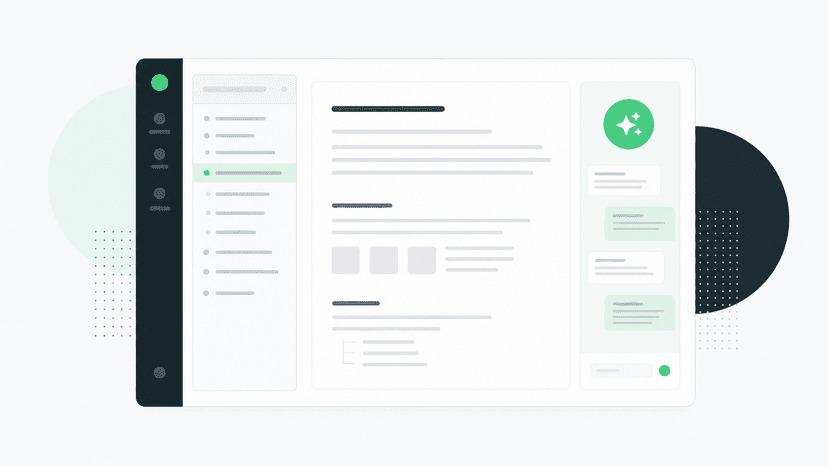
Each pick below earned its spot by surviving real shipping cycles, not demo decks. If you want to compare adjacent tools first, the AI tools alternatives hub is a useful starting point.
ChatPRD: AI Documentation and PRD Writing
ChatPRD is the closest thing to a dedicated AI PM. It prompts you on gap analysis, edge cases, and rollout plans, then exports finished PRDs to Notion, Confluence, or Google Docs. Over 750,000 docs created and 100,000+ PMs on the platform, with users reporting roughly 10 hours saved per week. Pricing starts at $5/mo. Weakness: opinionated PRD structure can feel rigid for teams with non-standard templates. Pair it with our product description generator for prompt patterns that travel well.
Dovetail: Customer Intelligence and Feedback Synthesis
Connect Dovetail to support tickets, sales calls, user interviews, and surveys, then ask in plain English: "Why did users churn last quarter?" You get themes plus the direct quotes that back them. This is the difference between guessing and knowing. Weakness: the value compounds only once you wire up at least three feedback sources. Teams running lean qualitative loops should still see our voice analysis review for upstream call cleanup.
Granola: User Call Transcription and Insight Extraction
Granola joins your calls, transcribes them, and summarizes what matters. Templates handle different call types: usability testing, onboarding interviews, churn calls. Summaries include pain points, feature requests, and verbatim quotes you can paste straight into a PRD. Weakness: the AI struggles with overlapping speakers in 6+ person calls. For founders building briefing assets from those calls, Lideroo's research tooling is a useful follow-on layer.
DeepSky: Competitive Intelligence and Market Research
Where most intel tools dump data, DeepSky synthesizes. Ask "How does our pricing compare to top 10 competitors?" and get a structured report with feature grids and positioning notes. PMs report cutting competitive research from days to hours. Weakness: report quality drops in long-tail B2B niches with thin public data. See our AI tool tags directory for parallel approaches to market signal monitoring.
Perplexity: Research and Market Validation
Perplexity's Research mode returns answers with citations, which is the part that matters. You can validate feature assumptions without manually source-checking five tabs. Common PM queries: "How do top SaaS products handle onboarding?" or "What's the standard for B2B analytics dashboards?" Weakness: occasional source quality drift on very recent news. Bridge it with the broader AI research tooling we track.
Superhuman: Email Outreach and User Feedback Management
Superhuman was acquired by Grammarly in 2025 and the email product now operates as Superhuman Mail. Its AI rewrite preserves your voice while tightening copy, and user-reported data shows a 15–20% lift in response rates on cold outreach to users. Weakness: pricing is steep at $30+/mo and the inbox-zero workflow takes a week to internalize. For lower-volume outreach drafting, our bio generator handles short-form copy fast.
Claude and ChatGPT: Ideation, Distillation, and Problem Definition
Experienced PMs use Claude to role-play stakeholder perspectives, prompting it to argue as a skeptical designer or a load-conscious engineer before drafting specs. ChatGPT handles bulk feedback categorization: export a Slack channel, ask for themes, get usable structure in minutes. Weakness: neither enforces PRD structure, which is why ChatPRD still wins on documentation. Pair them with the tweet generator when you need to test launch copy variants.
Mobbin: Design Inspiration and UX Research
Mobbin indexes 300,000+ mobile and web screens, searchable by feature and flow. Redesigning onboarding? See how 50 top apps handle it side by side. Building checkout? Compare 30 implementations in 20 minutes. Weakness: light coverage of internal B2B tooling and admin panels. PMs working in those niches should supplement with the AI mobile app designer pages for current pattern references.
What to Look for in an AI Tool for Product Management

Three criteria separate durable picks from churn. Use them as filters before any trial, and cross-reference against our AI tools deals page for current pricing.
Workflow Integration Over Standalone Features
A standalone AI that requires copy-paste between five tools loses on context-switching tax. Native hooks into Linear, Notion, GitHub, and Slack are where real time is saved. Treat integration depth as a hard requirement, not a nice-to-have. Tools that plug into existing pipelines consistently win on adoption, just as the pitchghost research workflow demonstrates for pipeline-connected tooling.
Accuracy and Source Transparency
Research tools without citations force manual verification, which negates the speed advantage. Demand sources shown. If a tool cannot tell you where an answer came from, treat its output as a draft, not a fact.
Time Savings That Are Measurable
The average PM reviews about 10% of available customer feedback manually. Tools that process the full corpus do not just speed up decisions, they change decision quality. Measure savings in hours per week per workflow, not "productivity." More category-level benchmarks live in our AI tool categories index.
How to Choose the Right AI Tool for Your PM Workflow

Audit before you adopt. Most teams buy too many tools too fast, then churn through them in a quarter. Our AI tool tags directory helps narrow by workflow first, vendor second.
- Map your time sinks. Documentation, research, user calls, and email are the four most common bottlenecks. Track a week before deciding.
- One tool per bottleneck. Adopt a full suite at once and your team will reject all of it. Tool fatigue is real.
- Skepticism beats coverage. Aakash Gupta tested 47 tools and only 9 delivered durable value. More trials did not produce better outcomes.
- Free tiers validate; paid plans deliver. Most serious PM use cases need paid usage limits and integration access.
- Filter by org constraints first. Data privacy, on-prem, approved vendor lists. Filter before trialing, not after.
Takeaway: the cheapest mistake is buying nothing for a week while you watch where your hours actually go.
Frequently Asked Questions
What is the best AI tool for writing PRDs?
ChatPRD is the dominant choice, trusted by 100,000+ PMs with 750,000+ docs created. It enforces structure, prompts edge-case detection, and exports natively to Notion, Confluence, and Google Docs without copy-paste friction.
Can AI replace a product manager?
No. AI replaces specific PM tasks like documentation drafting, feedback synthesis, and competitive scans. It does not replace judgment, stakeholder alignment, or prioritization tradeoffs. Strong PMs use AI to spend more time on the human-only work.
How do product managers use ChatGPT in their workflow?
Most PMs use ChatGPT for bulk feedback categorization, brainstorming feature angles, drafting stakeholder updates, and rewriting fuzzy requirements into clearer language. Power users role-play personas to pressure-test ideas before committing them to a spec.
What AI tools help with user research and feedback analysis?
Dovetail leads on multi-source synthesis across tickets, calls, and surveys. Granola handles live call transcription with pain-point extraction. Perplexity covers external research with cited sources. Most teams combine at least two of these.
Are there free AI tools for product managers?
Yes. Perplexity has a strong free tier, ChatGPT and Claude offer free models, and ChatPRD includes a free starter plan. Free tiers work for validation, but most production workflows require paid usage limits.
What is the best AI tool for competitive intelligence for PMs?
DeepSky leads for structured competitive reports against up to 10 named rivals, including feature grids and pricing benchmarks. Perplexity is the strong free alternative for lighter scans, especially when you need cited sources you can hand to leadership.
How much time can AI save a product manager per week?
ChatPRD reports an average of 10 hours per week saved on documentation alone. Stacking documentation, research, and feedback synthesis tools typically yields 12–20 hours weekly for PMs running active discovery and shipping cycles.
Which AI tools integrate with Notion and Linear for product teams?
ChatPRD integrates natively with Notion, Confluence, Linear, and GitHub. Dovetail offers Notion exports and Linear webhooks. Granola pushes summaries into Notion and Linear. These three cover most modern PM stack integration needs.
Conclusion
The strongest PM AI stacks in 2026 are not the longest. They pair a documentation tool like ChatPRD, a customer intelligence platform like Dovetail, and one versatile LLM (Claude or ChatGPT) for the work that does not fit a category. Specialized tools consistently beat general AI on high-stakes outputs like PRDs and competitive reports, while generalist models cover the long tail of ideation and synthesis. For a continuously updated, searchable index across every PM workflow category, the AI tools directory at aidirectori.es lets you audit your stack against what is actually working this quarter.