Introduction
Back in 2013, only a small group of marketers trusted automation for SEO. Most people still believed that ranking on Google required hours of manual keyword research, hand written content, and slow, tedious link building. Fast forward to today, and more than 78% of growing businesses use some form of automated search optimization to stay competitive. That shift didn’t happen by accident. It came from years of smarter algorithms, better tools, and the rising pressure to grow faster with fewer resources.
Autopilot SEO is the natural result of that evolution. It’s not about replacing humans, it's about removing the repetitive tasks that drain your time and energy. If you’re a small business owner trying to juggle marketing with everything else, automation gives you breathing room. If you’re a creator or agency, it helps you scale without hiring a massive team. And if you’re a mid size company, it keeps you competitive in markets where speed matters as much as strategy.
This guide breaks down what autopilot SEO really means today, how it evolved, and how you can build your own automated system step by step. You’ll learn the tools, workflows, and strategies that modern businesses use to grow consistently without burning out or falling behind.
What You’ll Need
To follow the steps in this guide, you’ll benefit from having:
- A basic understanding of SEO (keywords, content, links)
- Access to SEO tools (Ahrefs, Semrush, Surfer, or similar)
- A CMS like WordPress, Webflow, or Shopify
- Optional: AI Directories (aidirectori.es) to submit your service to 100+ directories for automated visibility
What Autopilot SEO Actually Means Today

Autopilot SEO refers to automated systems that handle repetitive SEO tasks such as keyword discovery, content optimization, internal linking, and performance monitoring. Unlike traditional SEO, which relies heavily on manual work, autopilot SEO uses workflows, triggers, and AI powered tools to keep your site optimized around the clock.
Many people assume “autopilot” means “set and forget.” It doesn’t. The best automated systems still need human supervision but they remove the grunt work so you can focus on strategy. For example, instead of manually checking rankings every week, an automated system alerts you when something changes. Instead of writing every blog post from scratch, AI tools generate drafts you can refine.
Real world examples include:
- Automated keyword clustering
- AI generated content briefs
- Internal linking tools that update site structure
- Rank tracking alerts for sudden drops
- Link building workflows that run daily
Automation doesn’t replace SEO. It accelerates it.
The Evolution of Automated Search Optimization

SEO automation didn’t appear overnight. It grew alongside Google’s major algorithm updates, each one pushing marketers toward smarter, more scalable systems. Early tools handled simple tasks like rank tracking, but updates like Panda, Penguin, and Hummingbird forced deeper analysis and cleaner content. By the time RankBrain and BERT arrived, AI-driven insights became essential. Today, automation helps small businesses compete with larger brands by handling tasks that once required entire teams. The evolution reflects a simple truth: search has become too complex and too fast-moving for manual work alone to keep up.
From 2005 to 2025, SEO automation evolved alongside Google’s algorithm updates:
- 2005–2010: Basic tools for keyword research and rank tracking
- 2011–2013: Panda and Penguin forced smarter content and cleaner links
- 2014–2016: Hummingbird and RankBrain introduced intent based search
- 2019: BERT improved natural language understanding
- 2020–2025: AI driven clustering, content generation, and predictive analytics
Each update made manual SEO harder and automation more necessary. Small businesses and agencies adopted automation to keep up with rising competition, shrinking budgets, and the demand for consistent publishing.
From Manual SEO to Fully Automated Workflows
Manual SEO used to mean spreadsheets, endless tabs, and hours of repetitive tasks. Automated workflows change that by turning those tasks into predictable, repeatable processes. Instead of manually researching keywords or building internal links, tools now handle these steps with impressive accuracy. But automation doesn’t replace human judgment, it enhances it. You still set the strategy, choose the priorities, and refine the output. The difference is that you’re no longer buried in busy work. This hybrid approach saves time, reduces errors, and lets you scale your SEO efforts without adding more people to your team.
Manual SEO involves hours of repetitive tasks:
- Keyword research
- SERP analysis
- Content writing
- Internal linking
- Link outreach
- Reporting
Automated systems handle most of this for you. But not everything should be automated. Tasks like brand messaging, content editing, and strategy still require human judgment.
Hybrid SEO where humans set the strategy and automation executes it delivers the best results. It saves time, reduces errors, and allows teams to scale without hiring more people.
Core Components of an Autopilot SEO System
A strong autopilot SEO system is built on a few essential components that work together behind the scenes. Keyword discovery and clustering help you understand what your audience is searching for. Automated content tools generate drafts, optimize pages, and keep your site fresh. Link building workflows handle outreach, indexing, and diversification. Reporting dashboards track performance in real time, so you always know what’s working. When these pieces connect, you get a system that runs continuously, adapts quickly, and supports your long term growth without constant manual effort.
A complete autopilot SEO system includes:
- Keyword discovery & clustering: Tools group keywords by intent
- Automated content generation: AI drafts articles, outlines, and metadata
- Link acquisition workflows: Automated outreach, indexing, and tiered links
- Reporting dashboards: Real time performance tracking
These components work together to keep your SEO running 24/7.
Accuracy, Consistency, and Algorithm Alignment

One of the biggest advantages of automation is how reliably it performs. Humans get tired, distracted, or overwhelmed automated systems don’t. They follow rules perfectly, publish consistently, and maintain clean technical structures that search engines love. This matters because Google rewards stability and quality over time. Automated tools also stay updated with algorithm changes, adjusting faster than any manual team could. Whether it’s metadata, internal links, or content optimization, automation keeps everything aligned with current best practices so your site stays competitive even as search evolves.
Automation reduces human error, especially in large campaigns. It ensures:
- Consistent publishing
- Stable link velocity
- Clean metadata
- Proper internal linking
Modern tools also stay aligned with Google’s evolving rules. When algorithms shift, automated systems adapt faster than manual teams.
Competitive Advantage Through Rapid Adaptation
Search results change constantly, and the businesses that adapt fastest usually win. Automation gives you that edge by monitoring rankings, competitors, and SERP shifts in real time. Instead of discovering a ranking drop weeks later, you get alerts instantly. Instead of manually checking competitors, your system tracks their moves automatically. This speed lets you respond before others even notice what’s happening. You can scale content, adjust strategies, and capture new opportunities at a pace that manual teams simply can’t match. In competitive industries, that agility becomes a major advantage.
Autopilot SEO gives you speed. You can:
- Track competitors in real time
- Get alerts for ranking drops
- Scale content faster
- Identify new niches instantly
In competitive industries, speed is often the difference between ranking #1 and disappearing.
Cost Reduction and Resource Efficiency
Automation dramatically reduces the cost of running SEO campaigns. Tasks that once required writers, analysts, and outreach specialists can now be handled by a lean setup powered by smart tools. This doesn’t just save money, it frees your team to focus on strategy, creativity, and high impact decisions. For small businesses, the cost savings are even more meaningful. Instead of hiring a full SEO team or paying expensive agency retainers, you can run effective campaigns with a fraction of the budget. Automation makes professional level SEO accessible to everyone, not just big brands.
Automation lowers costs by reducing:
- Labor hours
- Content production expenses
- Agency fees
Small businesses benefit the most because automation levels the playing field. Instead of hiring a full SEO team, you can run campaigns with a lean setup.
Campaign Workflow Automation
A fully automated SEO campaign runs like a well designed machine. It starts with research, moves into content creation, handles optimization, and ends with reporting all without constant manual input. Automated audits catch issues early. Metadata tools update pages instantly. Internal linking systems keep your structure clean and organized. You can even schedule content and track performance automatically. By integrating your tools into a unified workflow, you create a system that runs smoothly in the background while you focus on strategy. It’s efficient, predictable, and surprisingly easy to maintain once it’s set up.
Automated Content Creation and Spinning (Ethical Use)
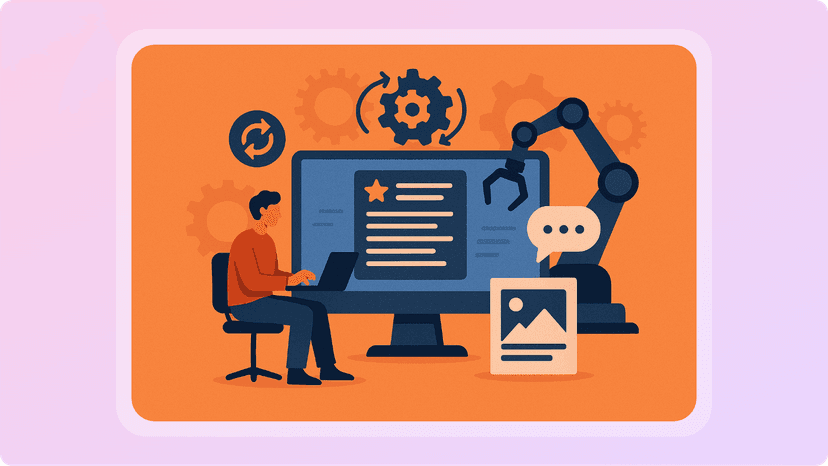
AI-assisted writing has come a long way, but it must be used responsibly. Ethical automation means using AI to support your content process, not replace it entirely. Instead of low quality spinning, modern tools help you generate outlines, drafts, and optimized sections that you can refine with your own voice. This keeps your content original, trustworthy, and aligned with your brand. Automation speeds up production, but human editing ensures quality. When used correctly, AI becomes a powerful partner helping you publish more without sacrificing authenticity or credibility.
There’s a big difference between AI assisted writing and low quality spinning. Ethical automation means:
- Maintaining originality
- Preserving Brand Voice
- Using human editors
- Avoiding duplicate content
Tools like Surfer, Jasper, and Koala support high quality automated content.
API Integrations and Third Party Services
APIs are the glue that connects your SEO tools, CMS, analytics platforms, and publishing systems. With the right integrations, you can automate everything from keyword data collection to content scheduling. For example, your keyword tool can send clusters directly to your CMS, which then triggers content generation or optimization workflows. Analytics data can feed into dashboards that update automatically. Agencies often build custom stacks using APIs to streamline client work and scale operations. These integrations turn separate tools into a cohesive, automated ecosystem that works together seamlessly.
Step by Step: Setting Up Your First Autopilot SEO Campaign
Setting up your first autopilot SEO campaign starts with defining clear goals and KPIs. Once you know what you’re aiming for, you can choose the right tools and build your automation stack. From there, you’ll create a content pipeline, set up link building workflows, and configure monitoring systems. The key is to start simple automate one part of your process, test it, and refine it. Over time, you’ll build a system that runs smoothly with minimal oversight.
The result is a scalable, predictable SEO engine that supports long term growth.
1. Define Goals and KPIs
Before you automate anything, you need clarity on what “success” actually means. Goals give your SEO direction, and KPIs help you measure whether your automation is working. Think of this step as setting the GPS before starting the engine. You might focus on increasing organic traffic, ranking specific keywords, generating leads, or improving conversions. Clear goals prevent wasted effort and help your tools make smarter decisions. When your KPIs are defined, automation becomes far more accurate and predictable because it knows exactly what to optimize for.
Checklist:
- Choose 1 to 3 primary SEO goals
- Define measurable KPIs (traffic, rankings, conversions)
- Set timelines and benchmarks
- Identify target pages or clusters
- Document your goals for tool configuration
2. Build Your Automation Stack
Your automation stack is the collection of tools that will run your SEO system. Think of it like assembling a team; each tool has a role, and together they handle the heavy lifting. You’ll need tools for keyword research, content optimization, link building, and reporting. The key is choosing tools that integrate well so your workflows stay smooth. A good stack reduces manual work, eliminates bottlenecks, and keeps your SEO running even when you’re not actively managing it. Once your stack is in place, everything else becomes easier and more scalable.
Checklist:
- Select tools for research, content, links, and reporting
- Ensure integration with your CMS
- Connect APIs were needed
- Configure automation rules and triggers
- Test each tool individually
3. Create Your Content Pipeline
A content pipeline is the engine of your SEO system. It outlines how ideas become published pages from keyword clustering to drafting, editing, optimizing, and scheduling. Automation helps by generating briefs, creating drafts, optimizing metadata, and organizing internal links. But human oversight keeps quality high. A strong pipeline ensures you publish consistently, maintain topical authority, and avoid gaps in your content strategy. When your pipeline is automated, you can scale output without burning out or hiring a massive team.
Checklist:
- Map your content stages (idea → draft → edit → publish)
- Automate briefs and metadata
- Build templates for consistency
- Assign human editing checkpoints
- Schedule content in advance
4. Set Up Link Workflows
Links are still one of the strongest ranking signals but building them manually is slow and inconsistent. Automated link workflows help you diversify your profile, maintain steady link velocity, and avoid risky patterns. These workflows can handle outreach, indexing, tiered links, and toxicity checks. The goal isn’t to remove human judgment, it's to streamline the repetitive parts so you can focus on strategy and quality control. With the right setup, your link building becomes predictable, scalable, and far more effective.
Checklist:
- Choose link sources (branded, niche, authority)
- Automate outreach and follow-ups
- Set link velocity rules
- Monitor toxicity and disavow risks
- Track new links automatically
5. Launch and Monitor
Once everything is configured, it’s time to launch your autopilot SEO system. But launching doesn’t mean walking away. Monitoring ensures your automation stays aligned with your goals and adapts to algorithm changes. Automated alerts help you catch ranking drops, content issues, or link problems early. Regular reviews keep your system healthy and evolving. Think of this stage as supervising a well-trained team; you're not doing the work, but you’re guiding the direction. Over time, your system becomes smarter, faster, and more reliable.
Checklist:
- Launch your workflows
- Set up ranking and traffic alerts
- Review dashboards weekly
- Adjust rules based on performance
- Document improvements and insights give you a complete, scalable system.
Keyword Research and Clustering at Scale
Keyword clustering helps you understand how searchers think and what topics they care about. Instead of targeting individual keywords, clustering groups related terms by intent, giving you a clearer picture of how to structure your content. Automation makes this process incredibly efficient, analyzing thousands of keywords in minutes. Once clusters are formed, you can identify pillar pages, supporting articles, and internal linking opportunities. This structured approach improves topical authority and helps search engines understand your site. It also guides your content automation, ensuring every piece fits into a larger strategy.
Keyword clustering groups related terms by search intent. Automation helps you:
- Identify pillar pages
- Build supporting content
- Map internal links
- Prioritize high value clusters
Clusters guide your entire content strategy.
Link Profile Diversification and Tiered Link Systems
A strong link profile is diverse, natural, and balanced. Automation helps you build this by managing outreach, indexing, and tiered link structures safely. Instead of relying on a single type of link, you can mix branded mentions, niche edits, authority placements, and social signals. Automated systems also track link velocity and detect toxic links before they cause problems. This keeps your profile healthy and aligned with Google’s expectations. When done correctly, automated link building supports long term growth without risking penalties or unnatural patterns.
A healthy link profile includes:
- Branded links
- Niche edits
- Authority links
- Social signals
Automation helps you build tiered links safely and monitor link velocity and toxicity.
The Future of Autopilot SEO (2026 and beyond)
The future of SEO is moving toward fully automated ecosystems powered by AI-first search engines and predictive ranking models. Content will be generated, optimized, and published in real time. Search will become multimodal, blending voice, visuals, and text into a single experience. Small businesses that embrace automation early will have a major advantage as these changes unfold. Instead of reacting to trends, automated systems will anticipate them. The next era of SEO will reward agility, data-driven decisions, and the ability to scale quickly all things automation excels at.
Expect:
- AI first search engines
- Predictive ranking models
- Real time indexing
- Fully automated content ecosystems
- Multimodal search (voice + visual + text)
Small businesses that adopt automation early will grow faster.
The Next Wave of Search Algorithm Changes
Future algorithm updates will focus heavily on quality, authenticity, and semantic understanding. Google is moving toward entity based search, where context matters more than keywords. Automation will help businesses adapt by analyzing patterns, adjusting content, and maintaining compliance with new ranking factors. As AI becomes more integrated into search, volatility will increase and automated systems will be essential for staying ahead. By preparing now, you can build a resilient SEO strategy that thrives even as the rules continue to evolve.
Future updates will focus on:
- Entity based search
- Semantic indexing
- AI driven ranking factors
- Stricter quality signals
Automation will help businesses adapt to volatility.
Future Trends in Autopilot SEO
| Category | 2024 | 2026 (Projected) |
|---|---|---|
| Automation Maturity | Medium | High |
| Cost of Tools | Moderate | Lower |
| AI Content Quality | Good | Excellent |
| Adoption by Small Businesses | 40% | 70% |
| SERP Volatility | High | Very High |
Why Autopilot SEO Matters for Modern Businesses
Autopilot SEO matters because it gives every business regardless of size the ability to compete in a crowded digital landscape. What once required large teams, and big budgets can now be achieved with smart tools and thoughtful workflows. Automation brings consistency, speed, and scalability to your SEO efforts. It frees you from repetitive tasks and lets you focus on strategy, creativity, and growth. For small businesses, creators, and e-commerce owners, it’s a powerful equalizer. It levels the playing field and opens the door to sustainable, long-term visibility.
SEO has evolved from manual link farms to AI driven ecosystems. Automation matters because:
- It saves time
- It reduces costs
- It improves consistency
- It levels the playing field
Small businesses, creators, and e commerce owners can now compete with big brands using smart automation.
AI Directories Matters for Startup Visibility
AI Directories matter because it takes the guesswork and grinds out of building online presence. For founders, indie makers, and SaaS teams, visibility is everything but manually submitting your product to dozens of directories is slow, fragmented, and often neglected. AI Directories flips that script. It centralizes the process, giving you access to 100+ curated directories that boost SEO, backlinks, and brand credibility in one streamlined workflow.
Why AI Directories matters:
- It saves time: No more manual submissions across dozens of sites.
- It boosts SEO: High authority backlinks strengthen your domain ranking.
- It drives organic traffic: More visibility means more signups and conversions.
- It builds credibility: Being listed across trusted directories signals legitimacy.
- It scales exposure: Multiple tools can be submitted for broader reach.
AI Directories is a growth multiplier. It saves time, amplifies reach, and lets you focus on what matters most: building and scaling your product.
Conclusion
Autopilot SEO isn’t about replacing human strategy, it's about amplifying it. For small business owners, creators, and marketing teams, automation offers a way to compete on a scale, stay consistent, and adapt faster than ever. The history of SEO shows a clear pattern: the businesses that embrace new tools early always win the next wave of growth. If you want to futureproof your visibility, now is the time to build your automated system and start experimenting. Choose one workflow to automate this week even something small and watch how quickly the momentum builds.