Introduction
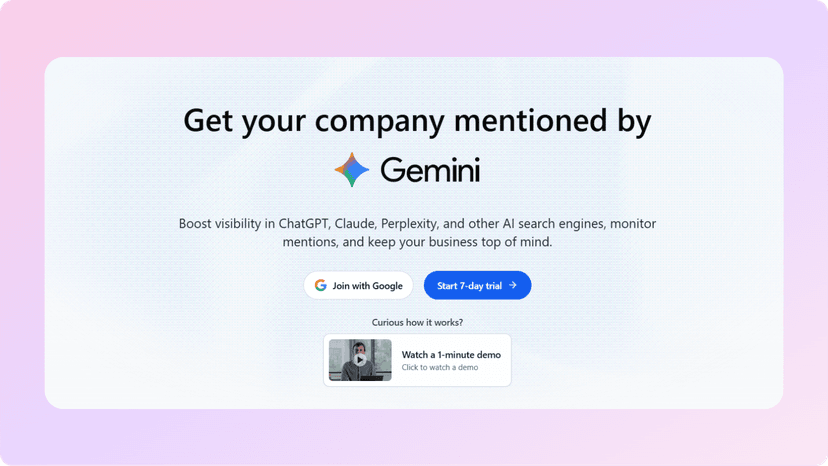
I just spent several weeks with Promptwatch, running through its dashboards, trying out prompts, comparing competitors, and taking a look at how it enables brand exposure in AI search/generative answers. It's a timely proposition: as users increasingly come to ChatGPT, Claude, Gemini, Perplexity et al. as “search engines” of sorts, having those appearances in those AI-answers is an important channel. Promptwatch would like to help brands to track, optimize, and tap that exposure.
What is Promptwatch
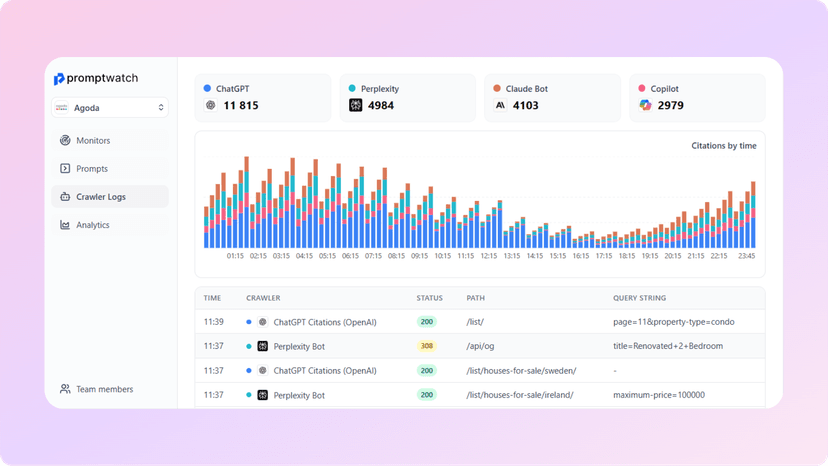
Promptwatch is an optimization and tracking platform for AI visibility. Top things that the product purports:
Monitor references to your brand (competitors) on top LLM-based/generative AI “search”/response platforms: e.g. ChatGPT, Claude, Gemini, Perplexity, DeepSeek etc.
Provide real-time tracking: see the prompts that are bringing up (or not) your brand.
Determine answer gaps: questions or points that don't currently include your brand even if it could be applicable.
Competitive benchmarking: how often your competitors are being mentioned vs you in the same prompts / AI models.
Real-time/frequent alerts & monitoring, visibility through scorecards, traffic attribution (AI-referenced traffic) etc.
It falls under what they call Generative Engine Optimization (GEO) – the next frontier that is akin to SEO, only for generative AI models.
How it works
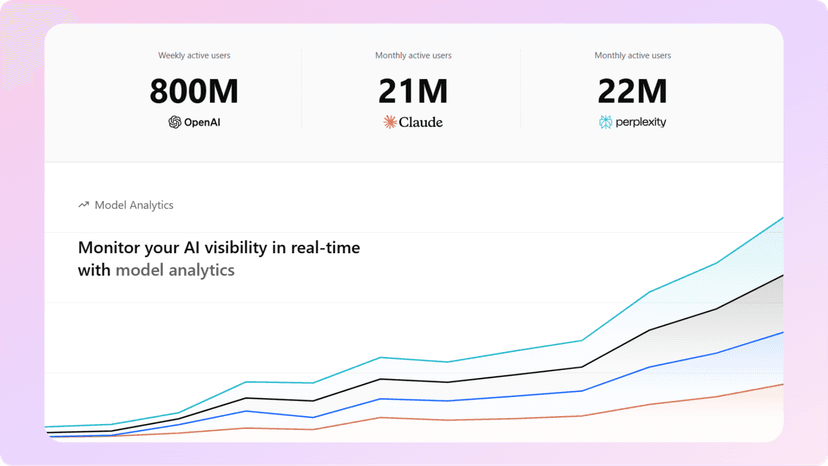
Prompt and Monitor Setup
You define prompts (questions) or user-question types that are of value to your business or material. The tool then maintains records of whether, when run in prominent LLMs, your brand is mentioned in the output (as a mention, cite, feature).
Frequency / Refresh Rate
Depending on the plan, weekly or daily updates are received. More expensive plans benefit from quicker / more frequent refreshes.
Analytics & Attribution
You get to learn of mentions count, visibility scores, estimates of traffic/ AI-referred sessions, comparisons of competitors' performances, as well as which model (ChatGPT version, version of Claude, etc) is doing the mentioning.
Alerts & Gap Detection
The tool points out if your brand is not featured in specific questions/parts (gaps in answers), show points that can benefit through updating the material, sometimes point out competitors' material/topics that outperform.
Support & Languages / Models
It supports many LLMs, many competitors, presumably many languages. Also has enterprise capabilities (monitor many brands/campaigns) and enterprise use.
My Personal Experience
These are the things that I attempted / learned from practical experience:
Setup is straightforward but needs forethought: it is nice to have the right prompts sorted out. If your prompts are too generic, your data will be noisy. If too specific, potentially lose out. Took the time to tweak mine (industry + competitor + long-tail versions of prompts). Promptwatch does the grunt work — adding models, competitors etc. was a breeze.
Dashboard and UX: Design is minimalist; data is shown simply (mentions, visibility, models, competing brands). Visualizations are beneficial. Some things, however, were somewhat ambiguous: e.g., "visibility score" calculations are not fully explained, so you see trends but not necessarily "why" changes happened. Also, attribution (amount of AI-traffic visiting whichever page) sometimes seemed random, presumably due to the way the AI models output results or don’t assign page URLs specifically.
Value in gap detection: That was one of the strongest points. I identified quite a number of opportunities that I knew I wanted to see the brand referenced (or could be referenced), but didn’t. Those gaps gave me actionable concepts for content (new articles / FAQs / rewrites) that felt likely to increase my share. Following incremental changes to my content, I saw incremental improvements to visibility for particular prompt types (within a week or two at daily-refresh levels).
Speed / Refresh / Limits: Refresh rates/limits (amount of prompts/answers that may be viewed) control how much you can test. And the universe of prompts/queries is enormous; no tool sees all of it. Sometimes reference to a brand is made in the variant of model/variation of prompt that Promptwatch has never encountered. So it gives trends & indicators—not complete coverage.
Competitor benchmarking is usable but unpredictable: Because brands differ by their content footprints, by budget, by SEO history et. al., the comparisons are perceptive but seldom apples-to-apples. E.g., a competitor excels simply because they invested in content, or started writing six months prior. Promptwatch shows you what to close up, yet it may take investment to catch up.
Support, onboarding: Support was good (for issues I had), docs are decent although some of the features (especially the tech-related features, e.g. API, integrations) are not quite fully realized / finished yet. Company is relatively young.
Pricing
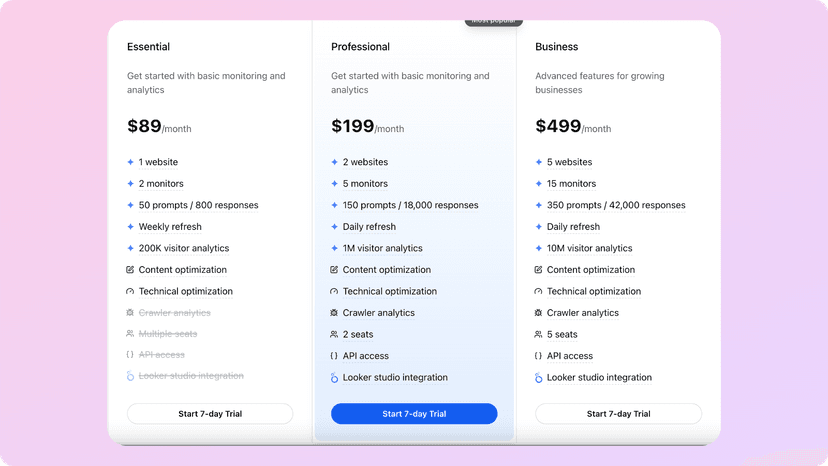
Promptwatch offers a 7-day free trial.
The main subscription levels are approximately:
| Plan | Price / Month | What You Get / Key Limits |
|---|---|---|
| Essential / Solo | US$ 89 / mo | ~ 1 site, 2 monitors, 50 prompts / ~800 responses, weekly refresh, ~200K analytics |
| Professional | US$ 199 / mo | More monitors, ~150 prompts / ~18,000 responses, daily refresh, more analytics, more seats |
| Business | US$ 499 / mo | More sites, ~350 prompts / ~42,000 responses, daily refresh, more seats |
| Custom / Enterprise | Contact sales | For large-scale use, advanced features, enterprise-class support and security |
So it is not free (though elsewhere it is sometimes described as “Free”) — the free part is just the trial.
Pros and Cons
Pros
- Strong niche value: brand presence in AI/generative answers not well covered by other SEO products.
- Actionable insights: gaps, competitor analysis, prompt-level visibility.
- Multi-model coverage: ChatGPT, Claude, Gemini, Perplexity etc.
- Useful for agencies: multi-brand tracking, benchmarking, ROI reporting.
- Good UI & alerting: clear dashboards, trend monitoring, visibility alerts.
Cons
- Costly for smaller brands: high relative to actionable return in lower tiers.
- Opaque metrics / refresh delays: visibility score unclear; slower data refresh in cheaper tiers.
- Incomplete coverage / noise: AI responses vary, sometimes brand not logged or attribution unclear.
- Learning curve: requires careful prompt design; newer features (API, integrations) still maturing.
- Risk of over-focusing: visibility without conversion (traffic, leads, sales) risks wasted effort.
Conclusion
In short, Promptwatch is a valuable solution for many brands facing the growing importance of generative AI search/response visibility.
It is especially relevant if you’re already active in content marketing/SEO and now want to extend into the AI era — to be mentioned in ChatGPT answers, Perplexity responses, and beyond. It provides strong signals, especially about what’s missing (gaps), what queries to target, how competitors are performing, and how often you appear.
If you are a small, early-stage brand with limited resources, the cost/effort may feel high. But if you’re prepared to act on the insights (content creation, optimization, iteration), it is mature enough to be worthwhile.