Introduction
I've got a shocking stat for you: 91% of all web pages never get any organic traffic from Google. Wanna know why? Mostly because they don't have enough high quality backlinks. That’s a massive roadblock, and if you're trying to grow your site, you feel that pain every day.
The old school advice, the common wisdom in SEO, is to chase links one by one. It's a slow, grueling process. If you’ve spent hours sending out those super personalized emails that just land in an inbox graveyard, you know exactly how frustrating that grind is.
But listen, what if you could stop the grind and start earning links in batches?
I’m not talking about buying thousands of spam links overnight; that’s a fast track to a miserable Google penalty, and trust me, you don't want that headache. Instead, I’m going to walk you through five proven, scalable methods. These strategies show you how to add many backlinks at once by creating genuinely high-value content and using smart outreach that makes link acquisition efficient and, most importantly, ethical.
The goal is simple: One piece of killer content or one smart outreach move should get you multiple links, not just one.
What You’ll Need to Get Started
Before we jump in, grab these tools. They make the scalable part of this process possible:
- Ahrefs or Semrush: You need one of these. They are required for finding broken links, spying on competitors, and checking a site's Domain Rating (DR).
- A Dedicated Content Budget: Seriously. Creating high quality assets (like custom tools or original research) is an investment, but it pays off huge dividends.
- Google Search Operator Knowledge: Learn how to use simple commands like
inurl:andintitle:It's like having a superpower for finding link opportunities. - Your Link Submission Partner: For maximum distribution right out of the gate, check out AI Directories. You can submit your service to over 100 directories, giving you massive initial reach.
1. The Linkable Asset Strategy: Earn Links While You Sleep
Let’s be honest: Chasing links sucks. The best solution? Create something so good that people have to chase you.
A "linkable asset" is a piece of content that is so valuable, useful, or unique in your industry that people will feel compelled to reference it. It’s not just a blog post; it’s an investment that pays you in long-term, passive link dividends. When you own the definitive piece of content on a topic, others have to link to you as the primary source.
What Counts as an Asset?
Think big. It could be:
- Original research (like an industry benchmark report)
- A free interactive tool (a calculator or quiz)
- A gorgeous data visualization (a historical timeline)
- A truly massive, authoritative guide
Data Insight:
Research shows that content with charts, graphs, and original data earns 3–5 times more links than regular blog posts. People link to proof and data, not just opinions.
Your Action Plan for Creation
- Ideation: What questions does your industry have that no one has answered with data yet? What calculation do people constantly perform in a spreadsheet? That unanswered question is your jackpot.
- Creation: Please, do not skimp here. This is not a rushed weekend project. Invest in professional design, reliable coding (if you’re building a tool), and deep, legitimate data analysis. It has to feel like an official industry resource.
- Seeding: Don't just hit publish and cross your fingers. Do an initial promotion push on social media, then actively pitch it to the 5 to 10 highest authority sites that would absolutely benefit from referencing your data.
Real world Examples:
Think of the success of HubSpot’s Website Grader (a free tool that built their entire domain authority) or those annual State of the Industry reports you see from major consulting firms. They generate hundreds of links year after year because they are the authoritative source.
2. Tapping into Resource Pages: A Scalable Outreach Method
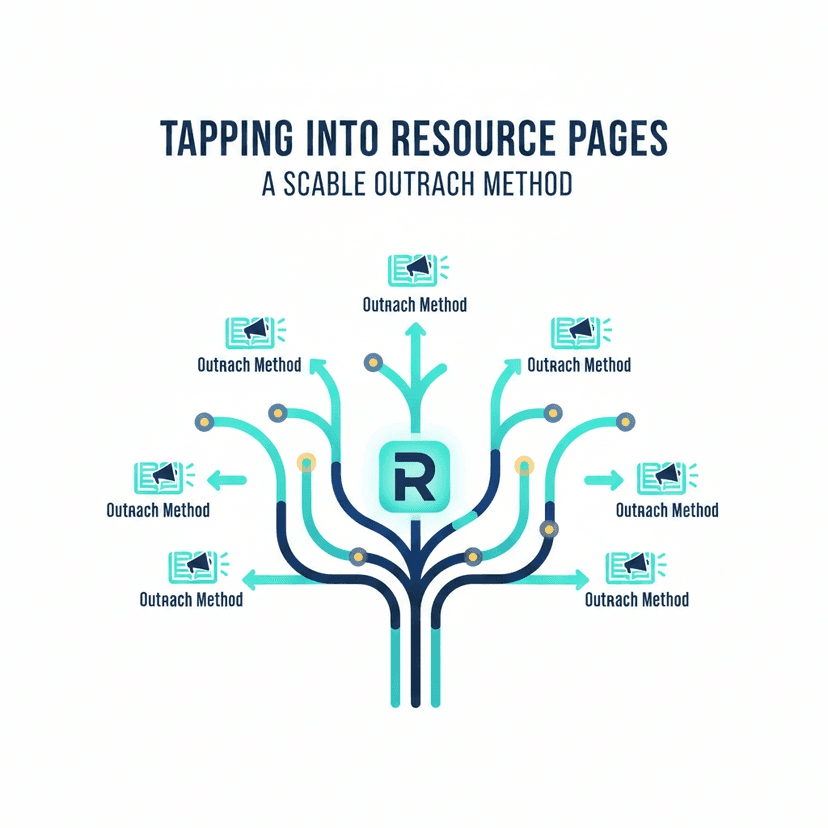
I love resource pages. They are absolute goldmines for scaling your link building because they are literally web pages dedicated to listing "The Best X Tools," "Recommended Reading," or "Essential Industry Resources."
Here's the key: The webmaster who owns that page is already looking for good links to add. You don't have to sell them on why linking is important; you just have to convince them that your link is a valuable addition for their readers. One smart search can reveal hundreds of relevant targets.
Quick Tactics for Discovery
To find these pages fast, you must learn to use Google search operators. This filters out the irrelevant noise instantly:
"Your Keyword" intitle:resources(This finds pages with the word "resources" in the page title.)"Your Keyword" inurl:links(This finds pages with "links" in the URL, which are often link lists.)"Your Industry Topic" "recommended reading"(A great way to find curated reading lists.)
Warning/Pitfall:
Don't waste your time. Always check the target page's Domain Authority (DA) or Domain Rating (DR) before you reach out. Pitching a site with a DR of 5 is inefficient. Stick to high authority, relevant targets only.
3. The Broken Link Building (BLB) Funnel for Bulk Link Acquisition
Broken Link Building (BLB) is one of my favorite link building hacks. It’s a systematic way to clean up the web while earning high-quality links in volume.
Here's the process:
- Find a resource page or relevant article that has a broken link (it leads to a dreaded 404 error).
- Recreate the dead content (or create something even better) on your site.
- Pitch your new live link to the webmaster as a valuable replacement for the dead one.
You are solving a problem for them (a broken link hurts their site’s user experience) and you gain a powerful backlink. That, my friends, is a classic win-win strategy.
Tools to Use
Finding the broken link opportunities is the hardest part, but these tools make it scalable:
- Ahrefs Site Explorer: Use it to find a competitor’s "Best by Links" 404 pages. This is like finding money on the ground.
- Screaming Frog: Run a full crawl on those juicy industry resource pages you found to check for any broken external links.
- Check My Links browser extension: A quick and easy way to manually check a single resource page for broken links before running a full-blown crawl.
The Efficiency Hack
The smartest BLB move is to target high authority resource pages that look neglected. Why? Because they often have multiple broken links scattered across the page. If you can recreate just two or three of those dead pieces of content, you pitch the webmaster once and potentially walk away with two or three backlinks simultaneously from that single outreach email.
Scenario: Imagine you find an industry resource page that links to a "Best Free SEO Tools" guide that was last updated in 2018 and has three broken links. If you create a brand-new, modern guide and pitch it, you could score links from that resource page and any other site that cited the deprecated content!
4. Content Syndication and Republishing: Leveraging Partners
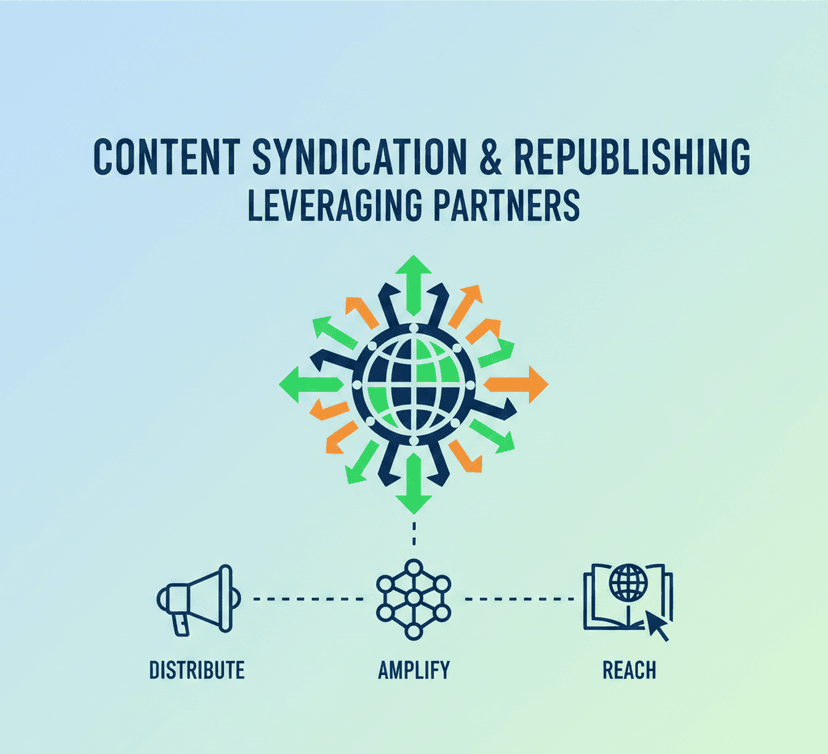
If you want a sudden, powerful influx of quality links, you need to look at content syndication. This is where you allow a major news site, journal, or high-traffic industry publication to republish your existing content on their site.
When they republish, they nearly always link back to your original post as the "Original Source." Then, every subsequent site that cites the syndicated version will often cite your original source, too. It’s a link multiplier.
- Guest Posting with a Twist: Stop doing one-off guest posts. Instead, focus on securing an ongoing "contributor" status on a high DA industry site like Forbes or a reputable trade journal. Every article you publish under your name automatically earns you an author bio link. This turns a single action into a repeatable, ongoing link source.
- Alternative: Use press releases strategically but only for genuine news (a big company announcement, a huge new data report, etc.). Reputable PR services can get your link picked up by dozens of minor news sites, which gives you valuable link velocity.
Warning/Pitfall:
You must be careful about duplicate content. When you syndicate, the publisher must correctly use the rel="canonical" tag pointing straight back to your original article. This tells Google that your URL is the master source and ensures your site gets all the juicy SEO credit and link equity.
5. What NOT to Do: Avoiding "Instant Link" Penalties
When you type "how to get many backlinks at once" into Google, you’ll inevitably get served some bad, dangerous advice. While the strategies above are white hat and scalable, you absolutely must avoid tactics that are "too good to be true."
The Black Hat Dangers:
I’m serious, avoid these tactics at all costs. They lead to devastating Google penalties:
- Paid Links without no-follow/sponsored: Buying or selling links to juice up your PageRank is a direct violation of Google's guidelines. Don't risk it.
- Link Schemes: This is just fancy talk for excessive, manipulative link exchanges ("I link to you if you link to me").
- Automated Link Building Software: Tools that automatically generate forum, comment, or garbage directory spam links. This is easily detected.
- Private Blog Networks (PBNs): Buying expired domains to build a private web of links pointing to your main site. This is a manual penalty waiting to happen.
Quality over Quantity
This is the core principle of good SEO: One high DA, relevant editorial link from a trusted industry website is worth more than 100 low-quality forum or comment links. Seriously. Don't jeopardize your entire website for a temporary bump in your link count. Focus on relevance and authority, always.
The Link Chase is Officially Over
Earning backlinks doesn't have to feel like a slow, painful struggle anymore. The secret to learning how to add many backlinks at once lies in shifting your focus away from individual outreach and toward scalable content creation and smart targeting.
By dedicating resources to building truly valuable linkable assets, systematically leveraging resource pages with powerful search operators, and cleaning up the web with broken link building, you can transform your link profile efficiently and ethically. You’ve gone from being a desperate link-beggar to an industry resource that people genuinely want to cite.
Your Next Step
The most successful people don't try to do all five things at once. Choose one of the strategies we talked about (I strongly recommend starting with The Linkable Asset Strategy) and dedicate the next 30 days to executing it perfectly.